

Länderleitfaden Belize
Belize Property Guide
Buying, living and investing in Belize
Belize is a bit different from the rest of Central America.
English is the official language, property is commonly priced in US dollars, the Belize dollar is pegged to the US dollar, and foreigners can own property outright in their own name.
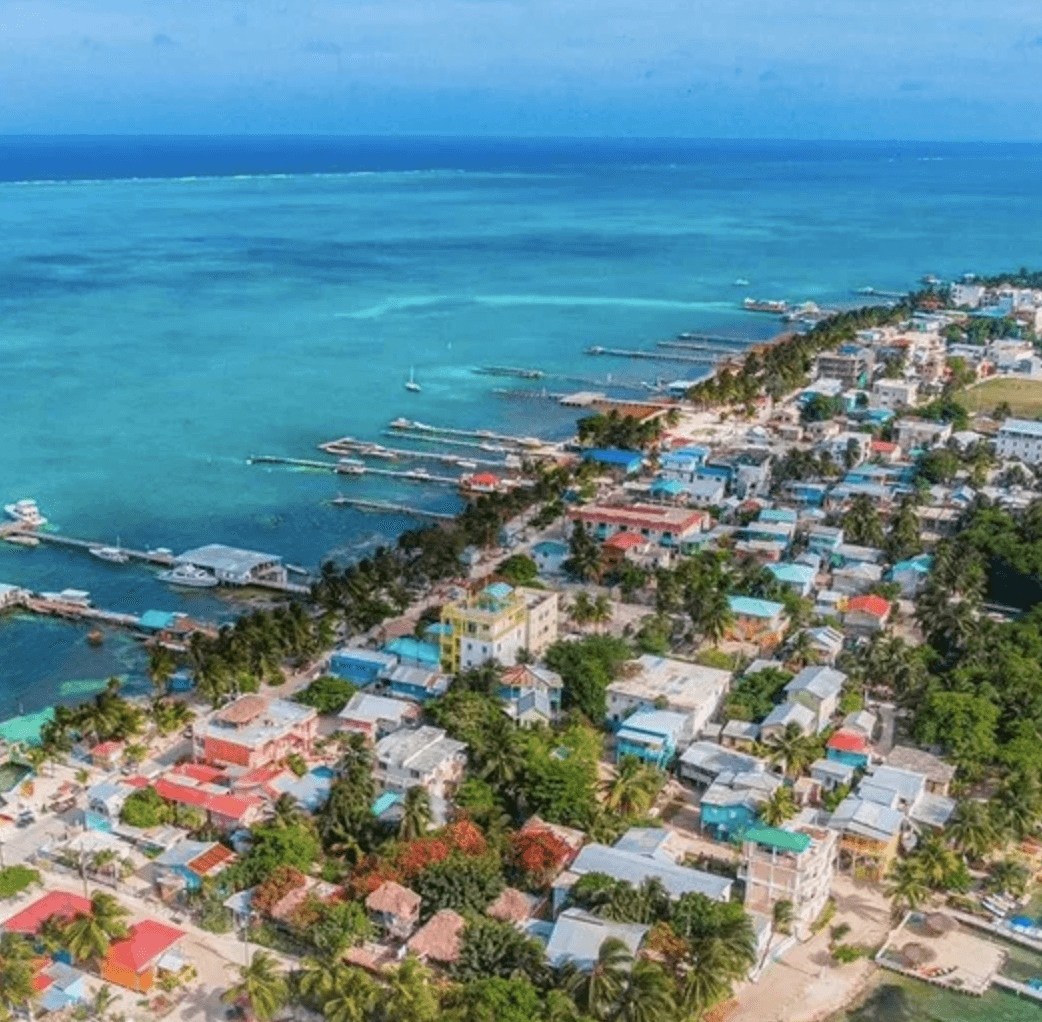
Then you've got the Caribbean Sea, the world's second-largest barrier reef, jungle, islands and a lifestyle where “go slow” isn't just something written on a tourist T-shirt.
For international buyers, that makes Belize relatively easy to understand.
But there is something worth knowing from the beginning:
Belize is an easy place to fall in love with and a relatively easy place to buy. Selling again can take considerably longer.
Can foreigners buy property in Belize?
Yes.
Foreign buyers can generally own property outright with the same basic ownership rights as Belizean citizens. You don't normally need a local partner simply because you're foreign.
You can buy, sell, rent and inherit property.
That simplicity is one of Belize's biggest attractions.
There isn't, however, the same comprehensive national MLS system you might expect in the United States or Canada. That makes choosing a reputable local agent and independent attorney particularly important.
Before buying, make sure the property's title, boundaries and ownership have been properly checked.
A beautiful Caribbean view is lovely.
A beautiful Caribbean view with clean title is considerably better.
Can you live in Belize if you buy a property?
Buying property and obtaining residency are separate things.
Many nationalities can enter Belize as visitors and extend their stay, while people wanting to make Belize their permanent home have several options.
One of the best known is the Qualified Retired Persons (QRP) programme, aimed at qualifying people aged 40 and over who can demonstrate sufficient income from outside Belize.
There are also routes towards permanent residency for people who genuinely establish themselves in the country.
The rules, financial requirements and tax treatment can change, so check the current requirements with Belizean authorities or a qualified immigration professional before making your purchase dependent on residency.
The useful thing is that you don't have to become a resident before buying your home.
You can buy the property first. Your immigration status is a separate decision.
What does property cost?
This is where Belize becomes difficult to summarise with one average.
A piece of land on the mainland, a house in Cayo, a beachfront home in Placencia and a luxury villa on Ambergris Caye are completely different markets.
You can still find relatively inexpensive property on the mainland and in less tourist-focused areas.
In places popular with international buyers, prices rise quickly.
As a rough guide, homes around Caye Caulker and Hopkins can often sit around US$150,000–$400,000, while Placencia commonly moves into the US$300,000+ range.
Ambergris Caye is another market again. Condos can start in the low hundreds of thousands of dollars, while high-end houses and beachfront villas can easily reach seven figures.
So don't judge Belize from one headline claiming to show the “average house price”.
The property international buyers see online is often very different from the housing market local Belizeans actually live in.
What about rental returns?
Belize certainly has rental opportunities, but location matters enormously.
Traditional long-term rental yields tend to be fairly modest, often somewhere around the mid-single digits.
Holiday rentals are where the bigger numbers get advertised.
In destinations such as San Pedro, Placencia and Caye Caulker, a successful short-term rental can potentially produce attractive gross returns.
But there's a difference between gross income and money in your pocket.
Management, cleaning, maintenance, utilities, insurance, booking fees, quieter months and the occasional tropical repair bill all need paying.
A brochure might show you a 10% return.
Ask to see the actual bookings and actual expenses.
That's a much more interesting number.
How much does buying cost?
This is one area where Belize isn't particularly cheap.
Foreign buyers should allow roughly 10–12% of the purchase price for buying costs to give themselves some breathing room.
A large part of that is stamp duty, which is higher for most foreign buyers than for Belizean citizens.
You'll also have attorney fees, title searches, registration costs and potentially a survey.
Annual property taxes, on the other hand, can be surprisingly low compared with North America or Europe.
Belize also doesn't currently have the sort of capital-gains tax system international buyers may be accustomed to elsewhere, although individual tax circumstances should always be checked professionally.
Use an independent Belizean attorney and make sure the title search is completed properly.
This isn't the part of the purchase where I'd try to save a few hundred dollars.
How easy is it to sell?
This deserves more attention than it normally gets.
Belize has a relatively small population and therefore a relatively small property market.
In popular destinations such as Ambergris Caye and Placencia there is a steady international audience, but that doesn't mean every property sells quickly.
A well-priced condo in a popular resort area may move reasonably quickly.
A US$1 million individual beachfront home has a much smaller pool of potential buyers and could take many months — sometimes considerably longer — to sell.
Asking prices can also be optimistic.
So if you're buying purely as an investment, don't just ask:
“What could this be worth in five years?”
Also ask:
“Who is realistically going to buy it from me?”
That second question matters in smaller property markets.
What's it actually like living in Belize?
Belize has a character of its own.
It feels Caribbean and Central American at the same time.
Life can be slower. Things aren't always as organised as they are back home. Infrastructure varies enormously depending on where you are.
And that's part of the appeal.
Ambergris Caye gives you the international island lifestyle around San Pedro.
Caye Caulker is smaller, slower and famously relaxed.
Placencia combines beaches with a growing international community.
Hopkins has strong Garifuna culture.
Head inland towards Cayo and San Ignacio and you get jungle, rivers, farms, caves and Maya history rather than beach bars and golf carts.
Before buying, spend proper time in the area.
Not three nights in a resort.
Go to the supermarket. Drive the roads. See what happens when it rains. Find the nearest doctor. Then decide whether you could actually live there.
Weather
Belize is tropical, so expect warmth and humidity throughout the year.
The drier period generally runs through the first part of the year, while the wetter season falls broadly between June and November.
And then there's hurricanes.
They're not something to panic about, but they're something a property owner needs to plan for.
If you're buying near the coast, understand your insurance, construction quality, drainage and storm protection.
The cayes benefit from sea breezes.
Inland areas can feel considerably hotter during the day.
Food
Belizean food reflects the country's mix of Caribbean, Maya, Creole and Garifuna influences.
You'll quickly meet rice and beans, stew chicken, fry jacks, fresh fish, lobster and conch.
In Hopkins, try hudut, the traditional Garifuna combination of fish and mashed plantain.
And you'll probably discover Marie Sharp's hot sauce fairly quickly.
Then have a cold Belikin somewhere you can see the Caribbean.
Some things don't need overthinking.
Things to do
Belize punches well above its size here.
The Great Blue Hole is the famous one, sitting out on Lighthouse Reef. You can dive it, snorkel around the area or see it properly from the air.
Then there's Hol Chan Marine Reserve and Shark Ray Alley.
If you fish, Belize is world-class territory for bonefish, permit and tarpon.
On land you've got caves, waterfalls, jungle and major Maya sites such as Xunantunich and Caracol.
And on Caye Caulker, one of the best activities is sometimes doing absolutely nothing.
That's rather the point.
Schools
Public education is available, but international families may also consider private or international options.
The choice isn't enormous, particularly once you move away from the larger population centres.
There are options around Ambergris Caye and Belmopan, while some families with older children use online schooling or education outside Belize.
If you're moving with children, sort the school question before the property question.
An island lifestyle can look rather different when your teenager needs something the island doesn't have.
Healthcare
This is one of the areas where I'd think carefully before relocating permanently.
Belize can handle routine medical care, and there are both public and private facilities, particularly around Belize City.
But it doesn't have the depth of specialist healthcare available in larger countries.
There is no major Level 1 trauma centre, and serious or complex cases may require medical evacuation to Mexico or the United States.
On smaller islands and in remote areas, facilities are naturally more limited again.
For that reason, international medical insurance with medical evacuation cover is worth serious consideration.
The older you are — or the more complicated your medical needs — the more important your distance from good healthcare becomes when choosing where to buy.
Is Belize safe?
Most international buyers aren't experiencing Belize through national crime statistics.
They're living in places such as San Pedro, Placencia, Caye Caulker, Hopkins, Corozal or San Ignacio.
That distinction matters.
Belize does have a relatively high national homicide rate, but serious violence has historically been heavily concentrated in particular parts of Belize City and is often associated with gang activity.
In the main tourism and expatriate areas, theft and burglary are generally more relevant everyday concerns.
Use normal common sense.
Don't flash cash, secure your property properly and understand the neighbourhood you're considering.
Again, don't judge an entire country from either a frightening headline or a perfect tourism photograph.
Neither tells you what Tuesday morning outside your house is actually like.
So, does buying in Belize make sense?
For the right buyer, Belize has a lot going for it.
English makes everyday life easier for North American and British buyers. Foreigners can generally own property outright. The currency is straightforward to understand. Property taxes can be very low. And you've got some extraordinary beaches, islands, diving, fishing and jungle.
But Belize is a small market.
That's probably the most important thing to remember.
Don't assume you'll sell quickly. Don't base an investment on the biggest holiday-rental number in the brochure. And don't overlook healthcare simply because the property has a dock and the Caribbean is at the bottom of the garden.
If you're buying because you genuinely want to spend part of your life there, those things become much easier to put into perspective.
Belize isn't really about finding the biggest property market.
It's about deciding whether “go slow” is something you'd enjoy for a fortnight — or something you could actually build a life around.