

Länderleitfaden Croatia
Croatia Property Guide
Buying, living and investing in Croatia
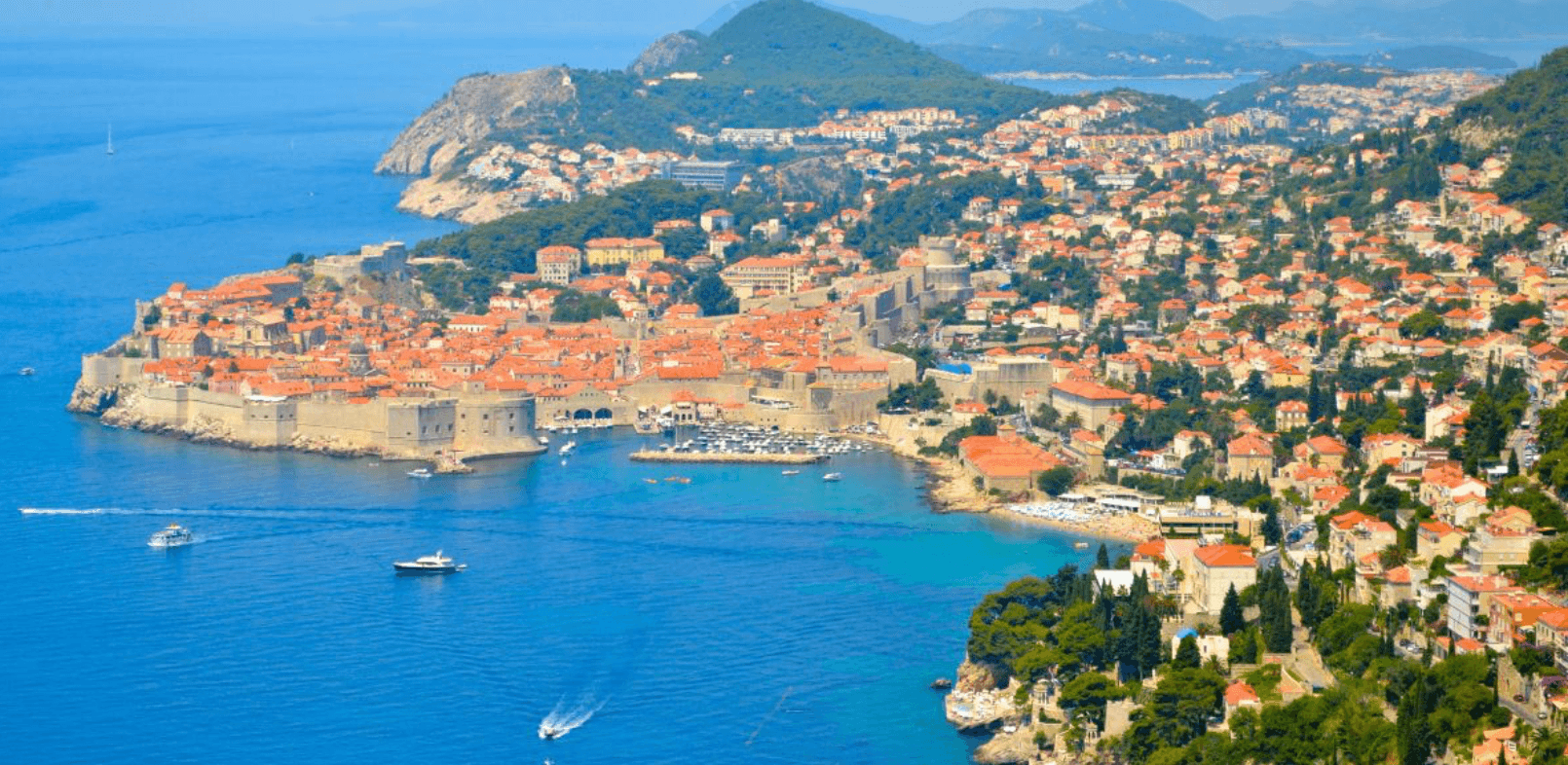
Croatia is one of those countries where the property photographs can do most of the selling for you. The Adriatic really is that blue. You've got historic stone towns, hundreds of islands, hot Mediterranean summers and places such as Split, Dubrovnik, Hvar and Rovinj that are firmly established on the international property map.
But Croatia isn't just its coastline. Zagreb is a proper year-round European capital, Istria has an almost Italian feel, inland Croatia can be dramatically cheaper, and some of the islands that are packed in August become incredibly quiet once winter arrives. Croatia is now firmly integrated into Europe — EU member, euro currency and part of the Schengen Area — which makes it particularly attractive to European buyers.
Before choosing the house, though, there's one important question: what passport are you buying it with?
Can foreigners buy property in Croatia?
Yes, but the rules depend on your nationality. For EU and EEA citizens, buying is relatively straightforward and you generally have similar property ownership rights to Croatian citizens.
For buyers from outside the EU — including British, American and Canadian buyers — things can involve an additional step. Purchases are generally possible where Croatia has reciprocity with your country, but approval from the relevant Croatian authorities may be required. That's something to establish before committing yourself to a purchase.
Use an independent Croatian lawyer and have the ownership checked through the country's land register. This is particularly important with older coastal properties. Croatia has plenty of beautiful stone houses, but beautiful stone houses can also come with extensions, terraces, boundaries and outbuildings that don't look quite the same on the paperwork as they do in real life. Make sure you're buying what's actually registered, not simply what's standing there.
Can you live in Croatia if you buy property?
Buying and residency are separate. EU and EEA citizens have a much easier route to living and working in Croatia under European free-movement rules. Non-EU nationals are generally subject to Schengen visitor rules unless they obtain an appropriate residence permit.
Croatia has routes connected with work, family, study and other circumstances, alongside a digital-nomad option for qualifying remote workers. Simply owning a Croatian apartment doesn't automatically give a non-EU buyer the right to live there permanently. Particularly for British buyers after Brexit, being allowed to own the house and being allowed to live in the house all year are two different questions.
What does property cost?
Croatia isn't the bargain Adriatic destination it once was. Prices have risen considerably, particularly along the coast. New-build apartments nationally have been selling at around €3,000 per square metre, while asking prices along desirable parts of the coast can easily move beyond €4,000 per square metre.
Then you've got the premium destinations. Dubrovnik can push towards €6,000–€7,000 per square metre, with Split and desirable parts of Istria also commanding substantial prices. A good 70–80 m² coastal apartment can therefore easily fall somewhere around €250,000–€450,000, with prime sea-view and waterfront properties considerably higher.
Move inland and the picture changes completely. This is why “the average Croatian property price” doesn't tell you very much. A Zagreb apartment, Dubrovnik townhouse and village house in Slavonia aren't competing for the same buyer.
What about rental returns?
Croatia has two very different rental markets. Zagreb and other larger cities have genuine year-round residential demand, while the Adriatic coast is heavily influenced by tourism.
A well-positioned holiday apartment can generate excellent income during summer, with gross returns in successful tourist locations sometimes reaching around 5–9%. But Croatia's tourism calendar matters. A property that's full almost every night in July and August can look very different in January.
Once you include management, cleaning, booking commissions, maintenance, utilities, tax and months of lower occupancy, realistic net returns can fall closer to 3–5%. This is particularly important on the islands. Twelve weeks of fantastic bookings isn't the same as twelve months of rental income.
How much does buying cost?
For a resale property, Croatia generally charges a 3% real-estate transfer tax based on the property's market value. New-build properties are commonly treated differently where VAT is already included in the price.
You'll also need to allow for your lawyer, notary, registration and potentially estate-agent fees depending on how the transaction has been arranged. As a broad starting point, allowing around 3.5–7.5% above the purchase price gives you some room, although every transaction is different.
Croatia also has an annual property-tax system where municipalities set rates within national limits and exemptions apply in certain circumstances. If you're buying a second home or holiday rental, check the local municipality's rules rather than assuming the annual cost will be the same everywhere.
How easy is it to sell?
Croatia has a proper functioning property market with established portals, professional agencies, lawyers, notaries and an official land-registration system. Good apartments in Zagreb have a year-round audience, while desirable coastal property has a strong international market.
Something around three to five months can be perfectly normal for a sensibly priced property, while unusual, expensive or legally complicated homes can take considerably longer. Seasonality also matters. There are simply more people thinking about owning a house beside the Adriatic when it's sparkling in June than when the shutters are closed in February.
Agent fees are commonly a few percent, and capital-gains tax may apply where property is sold relatively soon after purchase. If you're planning a quick flip, get professional tax advice before assuming the profit is yours.
What's it actually like living in Croatia?
This is where you need to separate holiday Croatia from living-in-Croatia Croatia. The coast in summer is fantastic. Restaurants are open, boats are moving, town squares are full, the sea is warm and everyone appears to be outside until midnight.
Then January arrives. On some islands and in smaller coastal communities, restaurants close, ferry schedules change and the population shrinks dramatically. Some people absolutely love that peace. Others discover they actually wanted August all year.
Zagreb is completely different. It's a genuine working city with universities, hospitals, businesses, cafés and life throughout the year. Istria gives you another compromise: coast, countryside, vineyards, hill towns and easy connections towards Italy and Slovenia.
Before buying a holiday home with plans to eventually live there permanently, visit in winter. If you still love your Croatian island in February, you've probably chosen the right one.
Weather
The Adriatic coast has the climate most international buyers are looking for: hot, dry and sunny summers with generally milder winters. Inland Croatia has a much more continental climate with proper winters and hot summers.
And then there's the bura, the powerful northeasterly wind that occasionally reminds you who's actually in charge on the Adriatic. Spring and September are fantastic times to visit, with good weather and smaller crowds. August is wonderful if you're on holiday. It's less wonderful if you're trying to drive anywhere near the coast.
Food
Croatian food changes as you move around the country. On the Adriatic, seafood naturally dominates. Try grilled fish, octopus, crni rižot — black risotto — and peka, where meat or octopus is slowly cooked under a metal bell. There's excellent olive oil, local cheese and pršut, Croatia's cured ham.
Istria adds truffles and a noticeable Italian influence, while inland food becomes heartier and more Central European. Croatia also produces some excellent wine, including Malvazija in Istria and Plavac Mali further south.
Someone will eventually offer you homemade rakija. What happens next is between you and Croatia.
Things to do
If you like the sea, Croatia is difficult to beat. You've got islands such as Hvar, Brač, Korčula, Vis and Cres, with countless smaller islands in between. There are national parks including Plitvice Lakes and Krka, while Dubrovnik's old city walls are spectacular — although I'd avoid discovering them at midday in August.
Split has something quite extraordinary in Diocletian's Palace, where a Roman imperial palace became part of a living city rather than simply turning into a museum. Istria gives you medieval hill towns, vineyards and olive groves, while Zagreb has café culture, parks, markets and nearby Sljeme.
If you buy on an island, though, learn the ferry timetable. You'll develop a relationship with it.
Schools
Croatia has a good public education system, but lessons are naturally taught primarily in Croatian. For younger children who are genuinely relocating, that can be manageable surprisingly quickly. For older children, language becomes a much bigger consideration.
International and private schools exist, particularly around Zagreb and some larger coastal cities, but choice is much more limited than in major European capitals. If you're relocating as a family, decide where the children can realistically go to school before deciding which beautiful village you want to live in.
Healthcare
Croatia has a public healthcare system and major hospitals in cities including Zagreb, Split, Rijeka and Osijek. Residents participate in the Croatian health-insurance system, while European visitors may have access to necessary care through applicable reciprocal arrangements.
For routine and serious treatment, Croatia has good medical infrastructure. On islands and in remote coastal locations, facilities are naturally more limited and serious cases may mean travelling to the mainland. That's not necessarily a reason not to live on an island — it's simply something worth considering before choosing one for retirement.
Is Croatia safe?
Generally, very. Street crime is relatively low and serious violence against visitors is uncommon. In the busiest tourist areas, the more realistic problems are things such as pickpocketing and opportunistic theft.
Summer wildfires are another consideration, particularly for rural and coastal property owners. There are also still some clearly marked areas inland affected by unexploded mines dating from the war, although these aren't places the average property buyer is going to casually encounter.
For everyday life, Croatia is one of those countries where most people simply don't spend much time thinking about personal safety.
So, does buying in Croatia make sense?
For someone wanting a Mediterranean property inside the European Union, Croatia has a lot going for it. You have the euro, Schengen, established property law, strong tourism, good infrastructure and one of Europe's most spectacular coastlines.
But Croatia isn't one property market. Zagreb can make sense for year-round living and rental demand. Istria offers coast and countryside with strong European connections. Split and Dubrovnik offer international demand but much higher entry prices. The islands can provide an incredible lifestyle — provided you're comfortable with just how seasonal island life can become.
For non-EU buyers, there's also more paperwork to understand before purchasing. So don't buy simply because you spent an amazing week sailing around Hvar. Go back and see the place without the yachts, sunshine and August crowds.
If you still want the keys when the Adriatic is grey and half the restaurants are closed, Croatia might genuinely be somewhere you want to call home.