

Länderleitfaden Cyprus
Cyprus Property Guide
Buying, living and investing in Cyprus
Cyprus has been attracting British and international property buyers for decades, and it's not difficult to understand why. You've got Mediterranean weather, the euro, English widely spoken in the main foreign-buyer areas, beaches, mountains and a well-established property market.
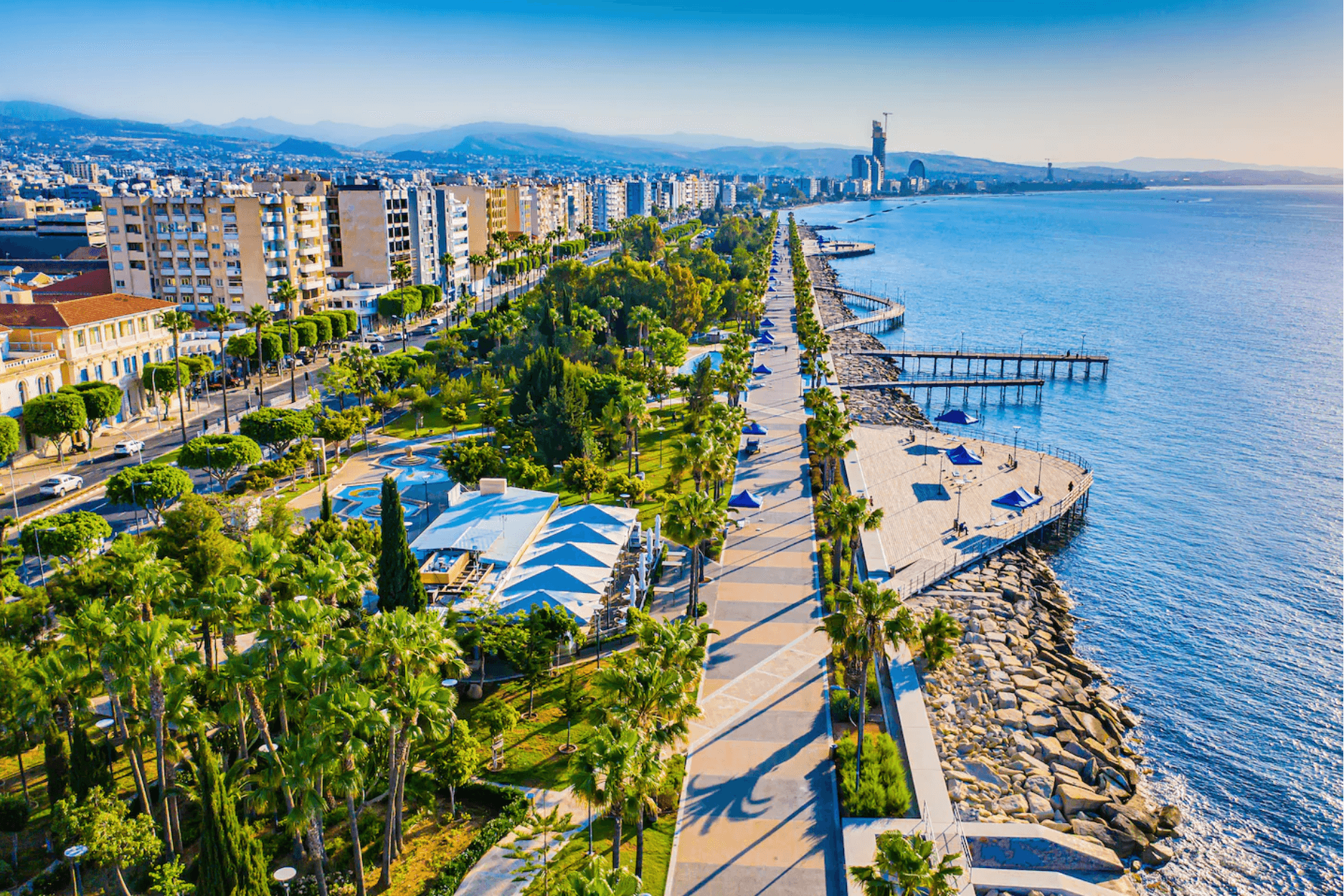
But Cyprus isn't one market. Limassol is the money. Paphos is the international crowd. Larnaca is increasingly the growth story. Nicosia is where you see much more of normal working Cyprus. And then there's the most important distinction of all: the island remains divided.
This guide covers property in the Republic of Cyprus in the internationally recognised, government-controlled south. Property in Northern Cyprus involves completely different legal and title issues connected with the island's history and division. If you're tempted by a villa north of the line because it appears dramatically cheaper, understand exactly why before going anywhere near a contract.
Can foreigners buy property in Cyprus?
Yes, although the process depends on your nationality. EU citizens have a relatively straightforward route, while non-EU buyers — including British buyers after Brexit — face additional rules and may require approval for their purchase.
Foreign ownership is nothing unusual here. In some coastal areas, international buyers make up a substantial part of the market.
The bigger issue in Cyprus has historically been title deeds, particularly with certain developments and new-build properties. Cyprus has spent years improving the system, but it's still something I'd want checked properly.
Use your own independent Cypriot lawyer. Confirm the property's title, planning permissions, mortgages or charges against it and exactly when the title deed will be transferred.
Don't let the sea view distract you from the Land Registry.
Can you live in Cyprus if you buy property?
Buying property and obtaining residency are separate things, although Cyprus does have routes connecting qualifying investment with permanent residence.
EU citizens have considerably easier rights to live and work in Cyprus. Non-EU nationals need the appropriate residence status if they want to stay beyond their permitted visitor period.
Cyprus also has a permanent-residence programme for qualifying non-EU investors. One established route involves investing around €300,000 in qualifying property or another permitted investment, together with meeting minimum overseas-income and other requirements.
The programme isn't citizenship. Cyprus ended its previous citizenship-by-investment scheme years ago.
And don't buy something purely because somebody tells you it “comes with permanent residency”. Immigration rules change.
Choose the property because you want it. Treat residency as a separate legal process that needs checking at the time you apply.
What does property cost?
Cyprus has seen substantial price growth, but prices vary enormously around the island.
You can still find apartments around €150,000–€300,000 in parts of Larnaca and Nicosia, while holiday apartments around Paphos commonly move into the €200,000–€400,000 range depending on location, age and proximity to the coast.
Limassol is a different animal.
International business, wealthy overseas buyers and substantial development have pushed prices dramatically higher. A seafront apartment can easily start around €300,000 and run well beyond €1 million.
Paphos has long been popular with British and other international buyers, particularly retirees and second-home owners. Larnaca has attracted increasing attention because entry prices have generally been lower than Limassol while significant development and investment continue.
So don't ask, “What does a house cost in Cyprus?”
Ask, “Which Cyprus?”
What about rental returns?
Apartments can produce gross long-term rental yields around 5%, give or take depending on location, purchase price and property type. Houses and villas often produce lower percentage yields because the purchase price is higher.
Holiday rentals can look considerably more attractive on paper, particularly in established coastal destinations. You'll see gross projections substantially above long-term rental returns.
But Cyprus has seasons.
July and August aren't the problem. The question is what happens to your occupancy in January and February.
Once you've included management, cleaning, booking fees, utilities, maintenance and empty periods, the difference between the advertised gross return and what reaches your bank account can become fairly impressive.
Summer pays well. Winter tells you whether you actually bought an investment.
If you're buying an existing holiday rental, ask for genuine historical bookings rather than a projection of what somebody thinks it might earn.
How much does buying cost?
Costs depend significantly on whether you're buying a resale or new-build property.
Cyprus uses Land Registry transfer fees based on the property's value, with different percentage bands. Reductions or exemptions can apply depending on whether VAT has been charged.
New-build property can carry VAT, with reduced rates potentially available on qualifying primary residences subject to the rules.
Cyprus abolished stamp duty on qualifying new property contracts from 2026, removing one of the smaller transaction costs.
You'll still need to budget for an independent lawyer and other transaction expenses. For a straightforward resale, allowing roughly 3–6% above the purchase price gives you a useful starting point, although VAT on a new development can change the calculation substantially.
Cyprus no longer has the old nationwide annual immovable-property tax, although local municipal charges still exist.
How easy is it to sell?
Cyprus has a real international resale market, particularly around Paphos, Limassol and Larnaca. Good apartments and sensibly priced coastal properties can attract buyers within a few months.
But it's not an American-style market where everything sells in thirty days.
Overpriced villas, unusual inland homes and properties with complicated title situations can sit for considerably longer.
Agent commission is commonly somewhere around 3–5% plus VAT, depending on the agreement.
Capital-gains tax can also apply when selling Cypriot property, subject to allowances and exemptions, so get local tax advice before calculating your final profit.
And this is another reason title matters.
A clean property is easier to buy. It's also considerably easier to sell.
What's it actually like living in Cyprus?
Cyprus is one of those places where relocating from Britain doesn't necessarily feel like jumping completely into the unknown.
English is widely spoken, particularly in the coastal and international areas. Driving is on the left. British influence is still obvious in plenty of places.
But the different cities offer completely different lifestyles.
Limassol is the international business centre — modern developments, money, restaurants and a much higher cost of property.
Paphos has a huge international community and is one of the easiest places for a British or northern European buyer to settle into.
Larnaca feels more Cypriot in many areas while still offering beaches, an airport and a growing international property market.
Nicosia doesn't have a beach at all. It's the capital and feels much more like a normal working city than a holiday destination.
Then you've got villages, mountains and smaller coastal communities where life moves at a completely different pace.
Don't choose Cyprus first and the town second.
The town will probably affect your life more than the island does.
Weather
This is one of Cyprus's strongest arguments.
The island gets a lot of sunshine, with long, hot and dry summers and relatively mild winters on the coast.
The sea is comfortable for swimming for much of the year.
August can become seriously hot, particularly away from the coast. If you're house hunting then, air conditioning can make absolutely anything look attractive.
Go back in winter before buying somewhere permanently.
And remember the Troodos Mountains. Cyprus isn't entirely beaches and swimming pools. You can leave the coast and find mountain villages, forests and even snow in winter.
Food
Cypriot food is one of the better reasons for spending time here.
There's souvlaki, kleftiko, sheftalia, fresh fish and proper Cypriot halloumi — which should squeak slightly when you eat it.
A traditional meze solves the problem of deciding what to order by essentially bringing you everything.
You'll also find plenty of international restaurants in the main cities and resort areas because so many nationalities now live on the island.
And coffee isn't something you grab while running somewhere.
It can take an hour.
That's sort of the point.
Things to do
For beaches you've got everything from Coral Bay around Paphos to the clearer waters around Protaras and Ayia Napa.
Paphos has archaeological sites, mosaics and the Tombs of the Kings. The Troodos Mountains provide villages, wineries, walking and an escape when the coast becomes ridiculously hot.
Nicosia is particularly interesting because it's one of the world's last divided capitals. Walking through the old city and crossing the Green Line gives you a very different understanding of Cyprus from sitting beside a hotel swimming pool.
There are wine villages, monasteries, harbour towns and enough coastline to keep a boat owner happy for years.
Cyprus is small enough that you can live beside the sea and be in the mountains surprisingly quickly.
Schools
Public education is free, with teaching primarily in Greek.
International families often choose private or international schools, particularly around Limassol, Paphos and Nicosia, where there are English-language, British-curriculum and IB options.
Fees can run into several thousand euros per child each year and popular schools can fill up.
If you're relocating with children, look at schools before buying the house.
A beautiful villa forty minutes from the right school becomes considerably less beautiful at 7:15 every morning.
Healthcare
Residents who qualify can access Cyprus's GESY healthcare system, while private healthcare is also widely used.
The larger cities have good hospitals and private medical facilities, particularly Nicosia and Limassol.
International buyers who aren't permanent residents commonly maintain private medical insurance.
For highly specialised treatment, travelling elsewhere in Europe or the region may occasionally be necessary, but Cyprus has considerably stronger medical infrastructure than many small island destinations.
Is Cyprus safe?
Generally, yes. Cyprus has relatively low levels of violent crime, and most residents don't spend much time worrying about personal security.
The more everyday risks are things such as opportunistic theft, tourist-area crime and occasional car break-ins.
The unusual risk in Cyprus isn't really street crime.
It's property history.
The island has been divided since 1974, and property ownership connected with Northern Cyprus can involve extremely complicated historic claims and legal disputes.
This guide deliberately focuses on property in the Republic of Cyprus.
A cheap house isn't cheap if you spend the next twenty years arguing about who owns the land underneath it.
So, does buying in Cyprus make sense?
Cyprus offers a combination that's particularly attractive to international buyers: EU membership, the euro, widespread English, excellent weather, an established foreign-buyer market and potential residency routes for qualifying investors.
But the markets are very different. Limassol can be expensive and investment-driven. Paphos is established with international buyers. Larnaca can offer a lower entry point with a changing market. Nicosia provides a much more year-round Cypriot lifestyle.
For investors, don't build your calculations around twelve months of summer occupancy. For homeowners, don't buy before your lawyer has properly checked the title. And if you're considering property because of residency, verify the immigration rules separately.
Most importantly, understand which side of the island you're buying on and why that matters.
Cyprus can be one of the easiest Mediterranean islands for an international buyer to feel at home on. Just make sure the paperwork is as welcoming as the weather.