
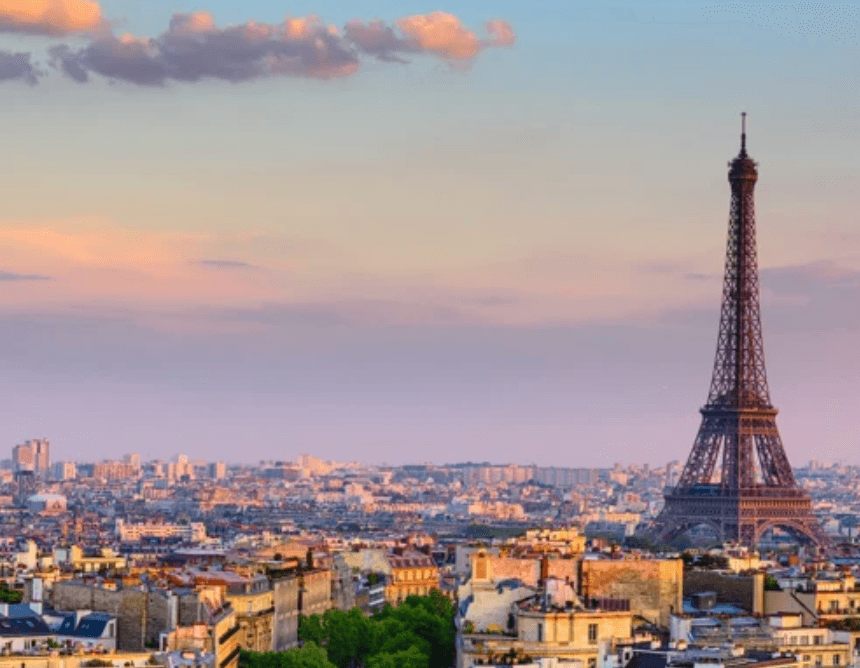

Länderleitfaden France
France Property Guide
Buying, living and investing in France
France is one of those property markets where saying “What's a house worth?” is almost meaningless. A Paris apartment can cost more per square metre than a beautiful stone house with land in rural France. You've got the Côte d'Azur, Alpine ski property, Atlantic coast, Provence, Brittany, Dordogne and thousands of villages where property can still look remarkably affordable compared with Britain.
Foreigners can buy relatively easily, the legal system is established and the notaire handles the formal transfer. The harder part for many international buyers isn't buying the house. It's working out whether they can actually live in it permanently.
France is EU, euro, proper infrastructure, excellent healthcare and a form for absolutely everything.
Can foreigners buy property in France?
Yes. France places very few general restrictions on foreign property ownership. British, American, Canadian and other international buyers can purchase houses and apartments directly without needing a French partner or special foreign-buyer licence.
The purchase normally runs through a notaire, a state-appointed legal professional who handles the formal conveyancing, searches, taxes and registration.
You'll typically sign a preliminary contract such as a compromis de vente, followed by a cooling-off period for qualifying residential buyers, searches and finally the acte authentique that completes the sale.
Around three months from accepted offer to receiving the keys is fairly normal when everything is straightforward.
Apartments need proper investigation of the copropriété — the shared building ownership — including previous meeting minutes, service charges and planned works.
Older rural houses bring different questions: roofs, drainage, septic tanks, heating and energy efficiency.
France still has some incredibly cheap old houses.
There is normally a reason they're incredibly cheap. Find it before you buy one.
Can foreigners live in France if they buy property?
Buying property doesn't automatically give you French residency.
EU, EEA and Swiss citizens have much easier rights to live and work in France.
British, American and other non-EU owners generally need the appropriate visa or residence status if they intend to stay beyond normal short-stay limits.
France has routes for visitors, workers, entrepreneurs, families, students and other qualifying residents. Long-term residents can eventually become eligible for more permanent status, subject to the applicable requirements.
For British second-home owners after Brexit, this distinction matters enormously.
France is perfectly happy to let you own the house. That doesn't mean France is automatically letting you live in it 365 days a year.
Sort the property and immigration questions separately.
How much does property cost in France?
The difference between Paris and provincial France is enormous.
Paris apartments have been around €9,000–€10,000 per square metre, with prestigious central arrondissements considerably higher. A fairly ordinary 60 m² Paris apartment can therefore cost somewhere around €550,000–€600,000 before you've done anything particularly extravagant.
Major regional cities such as Lyon, Bordeaux and Nice can broadly fall around €3,500–€5,500 per square metre, although prime neighbourhoods can go higher.
Then leave the major cities and France becomes a completely different property market.
In areas such as Dordogne, Brittany and parts of central or southwestern France, perfectly usable houses can still be found around €150,000–€300,000.
Go properly rural and properties below €100,000 still exist.
Just remember that buying a €70,000 farmhouse and spending €150,000 making it habitable isn't the same thing as buying a €70,000 house.
France can still be remarkably cheap. Renovating France isn't always.
What are rental yields in France?
France is generally more of a steady property market than a spectacular high-yield one.
Gross rental yields nationally can sit somewhere around 4–5%, with certain regional cities capable of producing more.
Paris often produces relatively modest percentage returns because the purchase price is so high. Provincial cities can sometimes offer a better balance between purchase price and rent.
Net returns naturally fall once you've included taxe foncière, building charges, maintenance, management, vacancies and tax.
Short-term rentals are another matter entirely. Cities including Paris have introduced increasingly strict rules around holiday rentals and registration.
Don't buy a Paris apartment assuming you'll simply put it on Airbnb whenever you're not there.
The Eiffel Tower doesn't automatically come with planning permission for your rental strategy.
How much does it cost to buy property in France?
This is where first-time international buyers sometimes get a surprise.
On an existing property, allow roughly 7–8% of the purchase price for what everybody calls frais de notaire.
Despite the name, most of that money isn't actually going into the notaire's pocket. Much of it consists of taxes and government charges collected through the transaction.
New-build property generally has much lower additional acquisition costs, often around 2–3%, because the tax structure is different and VAT is incorporated into the development price.
Estate-agent commission is commonly somewhere around 2–5%, although French listings may already include it in the advertised FAI — frais d'agence inclus — price.
Always check what the advertised figure includes.
France also has annual taxe foncière, which varies significantly by property and municipality.
Taxe d'habitation has disappeared for most primary residences, but second homes can still face it, and some high-demand municipalities impose additional charges.
The €100,000 village house might therefore be cheap to buy.
That doesn't mean it's free to own.
How easy is it to sell property in France?
France has an enormous established property market, public transaction information, professional agents and notaires who have probably seen every possible way somebody can complicate a property sale.
Once you've accepted an offer, completing the legal transaction commonly takes around three months.
Finding the buyer is another question.
Good properties at realistic prices still sell. Overpriced houses can sit quietly online while their owners explain that they're “waiting for the right person”.
Rural property can naturally take longer because the buyer pool is smaller.
Estate-agent fees commonly run around 2–5%, depending on the agreement.
Capital-gains tax can apply to investment and second-home property, with relief increasing according to how long you've owned it. Primary residences are generally treated much more favourably.
If you're buying a French second home as an investment, understand the eventual tax position before calculating your return.
Buying costs are already relatively high.
France isn't really designed for buying a house on Tuesday and flipping it on Friday.
What's it actually like living in France?
This is where France becomes difficult to summarise because there isn't really one French lifestyle.
Living in Paris has almost nothing in common with owning a farmhouse in Dordogne.
The Côte d'Azur is different again. So are Brittany, Provence, Normandy, the Alps and the Basque coast.
What France does exceptionally well is everyday life.
Markets still matter. Local bakeries matter. Lunch matters considerably more than it probably needs to. Small towns can still have independent butchers, bakers and cafés rather than everything happening inside a shopping centre.
The trade-off is bureaucracy.
France likes paperwork.
There will be forms. There will be appointments. There may be another form explaining why the first form was the wrong form.
Eventually it normally works.
The secret to France is accepting that lunch may happen considerably faster than administration.
Weather
France doesn't have one climate.
Paris and northern France have cooler, greyer winters and pleasant summers, with enough rain to make a British person feel strangely at home.
The Atlantic coast is mild and wetter.
Southern France and the Côte d'Azur have much hotter, drier summers and milder winters, although heat and wildfire risk have become increasingly important considerations.
The Alps give you proper winter and skiing.
And Provence gives you the version of France everybody saw in the property programme before deciding to buy an abandoned farmhouse.
One other useful piece of property advice:
Try not to arrange anything important in August.
France hasn't disappeared.
It has simply gone on holiday.
Food
This section could realistically be longer than the property section.
Bread that actually goes stale because it hasn't been designed to survive until Christmas. Cheese that can clear a small room. Proper markets. Atlantic seafood. Provençal vegetables. Charcuterie. Wine regions where lunch can accidentally become the rest of the afternoon.
And perhaps the greatest French property-investment metric of all: whether the village still has a decent bakery.
You'll also find enormous regional differences. Brittany isn't Provence. Alsace isn't Bordeaux. Basque food isn't what you'll eat in Normandy.
France is a country where you can drive two hours and suddenly everybody is arguing about a completely different cheese.
That's probably how it should be.
Things to do
Paris doesn't need much explanation.
Outside the capital you've got the Loire Valley châteaux, Provence and the Luberon, the Côte d'Azur, Biarritz and the Basque coast, Brittany, Normandy, Bordeaux wine country and the French Alps.
There are ski towns, surfing towns, Mediterranean ports, medieval villages and enormous stretches of countryside where very little happens.
And sometimes that's precisely why people buy there.
Village France still exists.
Just make sure the village you're buying into still has enough life left in it for the lifestyle you imagined.
A beautiful stone house five kilometres from a bakery is charming.
Thirty kilometres from absolutely everything starts becoming a logistical decision.
Schools
France has a strong public education system and state schools are free.
Teaching is naturally in French, which means international families relocating permanently need to think seriously about language.
Younger children often adapt remarkably quickly. Older children can find the transition more difficult.
International and bilingual schools exist in Paris and larger cities including Lyon and Nice, as well as some areas with substantial international communities.
But if you're genuinely planning to build a life in France, the local public-school system can also become one of the fastest ways for children — and eventually their parents — to integrate.
Healthcare
France has one of Europe's most established healthcare systems.
Eligible residents enter the French social-security healthcare system, with many people also carrying a mutuelle to cover some of the costs not fully reimbursed by the state.
There are excellent hospitals and specialists across the country, although access and waiting times naturally vary by region.
New arrivals may need private health insurance while establishing their residency and healthcare entitlement.
For someone considering France for retirement, healthcare is one of the country's major strengths.
You aren't choosing between a beautiful rural lifestyle and access to a functioning national medical system.
You can generally have both.
Is France safe?
Generally, yes.
France is a large country, so personal-security issues vary considerably by location.
Rural France can feel extremely quiet and safe. Large cities naturally have more crime, with pickpocketing and opportunistic theft particularly common around major tourist attractions and public transport.
Paris requires more awareness than a Dordogne village.
Marseille requires a different level of street sense from Annecy.
Protests and strikes are another part of French life and can occasionally disrupt transport and services.
You learn to live with them.
If the trains aren't running, there's normally a café nearby.
So, is France a good place to buy property?
France remains one of Europe's most interesting property markets because it offers almost everything.
You can spend €600,000 on a Paris apartment or €150,000 on a country house and technically say you bought property in the same country.
Foreigners can buy relatively freely. The legal system is established. Healthcare and infrastructure are excellent. And outside the most expensive cities and coastal areas, genuinely affordable property still exists.
But France isn't particularly cheap to transact in, rental yields aren't spectacular everywhere and owning a second home doesn't solve your residency position.
If you're buying rural property, look beyond the beautiful stone walls. Check the roof, drainage, heating, energy rating and septic system.
And spend time in the area outside summer.
The village with flowers, markets and cafés in July can feel rather different on a wet Tuesday in February.
France isn't really about finding the highest property yield.
For many people, the yield is getting to live in France.
Frequently asked questions about buying property in France
Can foreigners buy property in France?
Yes. France generally allows foreign nationals to buy property without needing a French partner or special foreign-buyer permit.
How much does property cost in France?
It varies enormously. Paris can average around €9,000–€10,000 per m², while houses in rural areas can still be found below €150,000 and occasionally below €100,000.
How much are the buying costs in France?
For an existing property, buyers commonly allow around 7–8% for taxes, notaire fees and related acquisition costs. New-build transaction costs are generally lower.
Can buying property in France give me residency?
No. Owning French property doesn't automatically provide the right to live in France permanently. Non-EU owners need the appropriate immigration status.
Where is the best place to buy property in France?
That depends entirely on your reason for buying. Paris offers a deep international market, southern France offers climate and lifestyle, major regional cities can provide rental demand, while rural areas offer substantially more property for your money.