
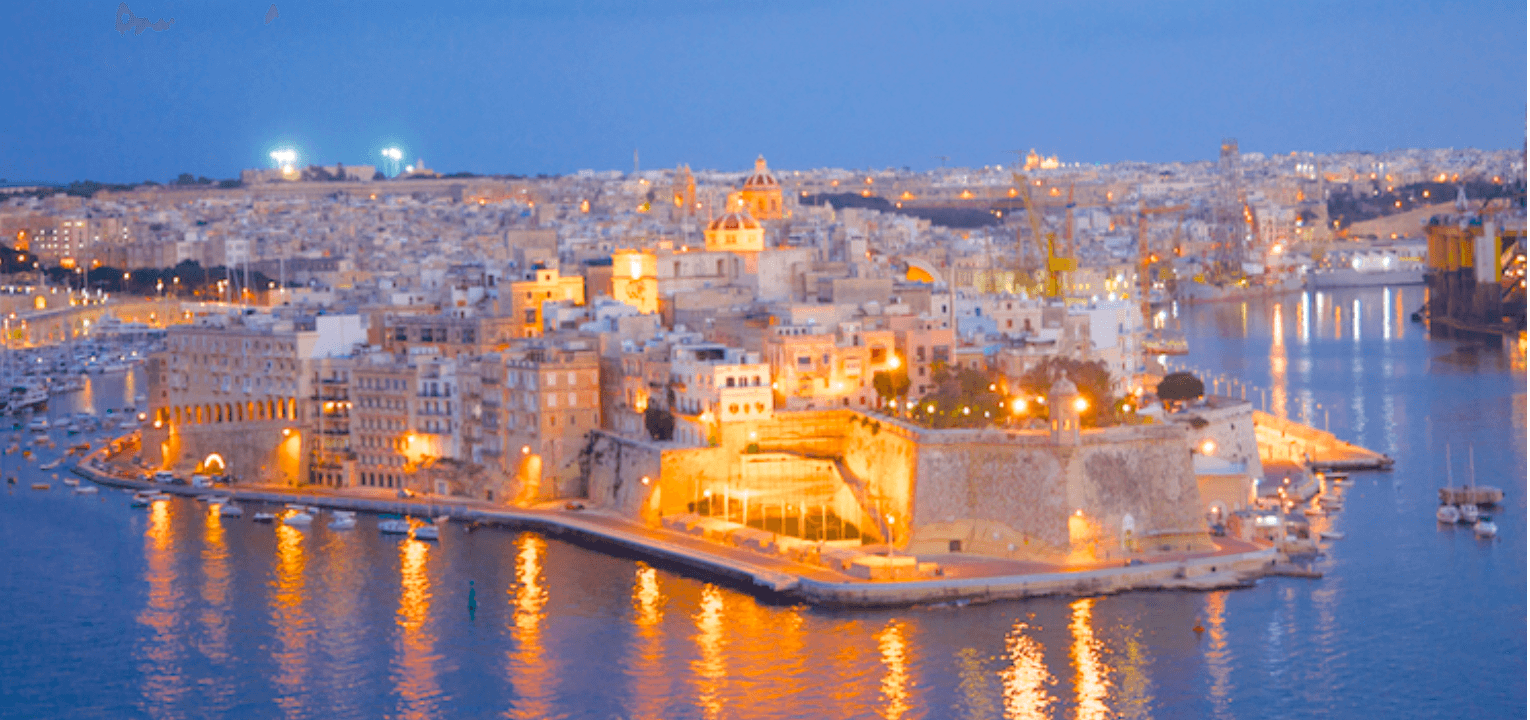

Guide pays : Malta
Malta Property Guide
Buying, living and investing in Malta
Malta is a tiny island with a surprisingly serious property market.
It's in the EU, uses the euro, English is an official language and there is a large international population working across finance, technology, gaming, professional services and tourism. For somebody relocating from Britain in particular, Malta can feel unusually easy to understand.
Then you've got the property market.
Sliema and St Julian's are apartments, cranes, offices, restaurants and seafront prices. Valletta is history. The south can offer better value. And Gozo is the quieter sibling that sometimes feels like somebody turned the volume down.
Malta isn't particularly cheap anymore, and rental yields aren't spectacular everywhere. But for the right buyer, the combination of language, EU location, residency options and year-round international demand is difficult to ignore.
Can foreigners buy property in Malta?
Yes, although the rules depend on your nationality, residency status and what you're buying.
EU citizens who have been resident in Malta for at least five years can generally buy more freely.
Other buyers may need an AIP — Acquisition of Immovable Property — permit, particularly non-EU nationals purchasing outside specially designated developments.
There are also Special Designated Areas, usually called SDAs, where foreign buyers can generally purchase more freely and where some of the normal AIP restrictions don't apply in the same way.
These include several large residential developments popular with international buyers.
The purchase itself normally runs through a Maltese notary.
You'll typically sign a konvenju, or promise of sale, and pay a deposit — commonly around 10%. The notary then carries out searches before the final deed transfers ownership.
It's a structured system and English is widely used throughout the professional property industry.
That doesn't mean you skip your own due diligence.
English paperwork can still contain expensive surprises. It's simply easier to read them.
Can foreigners live in Malta if they buy property?
Owning a Maltese property doesn't automatically give you Maltese residency.
EU and EEA citizens have much simpler residence rights, while non-EU nationals need an appropriate permit.
Malta has routes for workers, entrepreneurs, qualifying remote workers and other residents.
It also has the Malta Permanent Residence Programme — MPRP, which is particularly relevant to higher-net-worth non-EU applicants.
The programme combines qualifying property — either purchased or rented — with government contributions, fees and financial-asset requirements. The property generally needs to be retained for a minimum period.
Importantly, this is residency, not citizenship.
Malta's previous citizenship-by-investment model was effectively brought to an end following European legal action.
So don't confuse the two.
You can still structure a qualifying move to Malta. You can't simply buy a flat and find a Maltese passport in the kitchen drawer.
Residency programmes and financial thresholds can change, so anyone buying specifically for immigration purposes should confirm the current requirements before committing to the property.
How much does property cost in Malta?
Malta isn't the bargain Mediterranean island it once was.
A decent apartment can easily cost somewhere around €300,000–€450,000, while newer and better-positioned property in the northern harbour area can be considerably more expensive.
Sliema and St Julian's carry some of the biggest premiums. A good two-bedroom apartment can easily move into the €400,000–€700,000 range, with prime seafront and luxury developments going considerably higher.
Villas are another market entirely and can easily reach seven figures.
Move south and prices generally become more approachable.
Then there's Gozo, where buyers can often get considerably more property for their money and find traditional houses and farmhouses that barely exist in the dense apartment markets around Sliema.
That's one of the biggest decisions to make before searching.
Do you want Malta?
Or do you actually want Gozo?
They're very close geographically.
They can feel considerably further apart when you're living there.
What are rental yields in Malta?
Malta has strong rental demand, but high purchase prices mean percentage yields aren't necessarily spectacular.
Gross yields around 3.5–4.5% are a reasonable broad range in many established areas.
Sliema and St Julian's can sometimes produce lower percentage yields because property prices are so high, even though rental demand itself is strong.
Other areas, including parts of St Paul's Bay, southern Malta and Gozo, can potentially produce better headline returns depending on the property and rental strategy.
Malta's international workforce creates genuine long-term rental demand, particularly around the main employment centres.
That's an important distinction.
You're not relying entirely on somebody arriving for a week's holiday in August.
But calculate net returns properly.
Rental tax, management, maintenance, vacancies and condominium charges all reduce the figure.
Malta can be a good rental market without necessarily being a high-yield market.
Those are two different things.
How much does it cost to buy property in Malta?
As a broad starting point, allow roughly 6–8% above the purchase price, depending on the transaction.
The main cost is stamp duty, generally around 5% of the property's price or applicable value.
Part of that is normally paid when signing the konvenju, with the balance due on the final deed.
Various reliefs can apply, including favourable treatment for qualifying first-time buyers, so have the notary calculate your actual position.
Notary costs commonly add around 1–3%, depending on the transaction and searches involved.
If an AIP permit is required, there will also be a relatively modest application fee.
Estate-agent commission is normally paid by the seller rather than the buyer, although naturally it's still somewhere inside the economics of the transaction.
Malta also differs from many European markets because there isn't a conventional large annual national property tax comparable with what owners experience in some countries.
That doesn't mean owning property is tax-free.
Rental income and other liabilities still matter.
How easy is it to sell property in Malta?
Malta has a genuine secondary market, established estate agencies and an international buyer population.
That makes it considerably easier to understand than some small-island markets.
Once you've agreed a deal, the konvenju-to-completion process commonly takes around three months, although three to six months isn't unusual depending on searches, finance and the circumstances of the transaction.
Finding the buyer naturally depends on the property and price.
Sliema and the northern harbour area have deep demand, but they also have a lot of stock.
An apartment isn't automatically liquid just because you can see the sea from the balcony.
Seller-side estate-agent commissions can be significant, commonly around 3.5–5% plus VAT, depending on the agreement.
Malta's property-transfer tax system also needs to be understood because sellers can face tax calculated against the transfer value rather than simply a familiar capital-gains calculation on the profit.
Get Maltese tax advice before selling.
The number that matters isn't what your apartment increased by. It's what you actually keep when the deed is signed.
What's it actually like living in Malta?
Malta is convenient.
English is everywhere. The euro makes things straightforward. The airport has excellent European connections. The island is small enough that nowhere looks particularly far away on a map.
Then you discover Maltese traffic.
Distances and journey times are not always close friends.
The main urban corridor around Sliema, Gżira, St Julian's and Msida is busy, densely developed and increasingly vertical.
Some people love that — restaurants, cafés, offices and the waterfront on your doorstep.
Others arrive expecting a quiet Mediterranean island and wonder why they're looking at three tower cranes from the balcony.
Gozo provides a completely different version of Maltese life.
It's quieter, greener, slower and generally feels much more like the Mediterranean island people imagined before arriving.
Malta gives you convenience. Gozo gives you breathing room.
Work out which one matters more.
Weather
Malta has long, hot and very dry summers with mild winters.
There isn't really the lush tropical greenery you'll find in some of the other island destinations in these guides.
It's rocky, dry and unmistakably Mediterranean.
Summer can be extremely hot, particularly in dense urban areas where concrete holds the heat.
Humidity and the occasional sirocco blowing hot air and dust from North Africa add to the experience.
Air conditioning isn't really a luxury in August.
It's part of the property specification.
A third-floor Sliema apartment without it is something you'll understand exactly once.
Food
Maltese food reflects exactly where the islands sit geographically — between Europe and North Africa, with particularly strong Italian and Sicilian influence.
Try pastizzi, ftira, rabbit stew — fenek — and lampuki when it's in season.
Seafood naturally features heavily.
Valletta and the Three Cities have excellent restaurants, while the international population means you can find almost every cuisine imaginable around the busier parts of Malta.
And you're never particularly far from Italian food.
Which, geographically and spiritually, makes sense.
Things to do
Malta's biggest advantage is how much is packed into such a small area.
You've got Valletta and the Grand Harbour, the Three Cities, Mdina, prehistoric temples, diving, sailing and hundreds of places where you can simply jump into remarkably clear Mediterranean water.
Then there's Gozo.
Go for the weekend and there's a reasonable chance you'll start wondering why you're going back on Sunday.
Comino and the Blue Lagoon are beautiful, although summer crowds occasionally make you wonder whether everybody in Europe received the same invitation.
Malta isn't a place where you're driving six hours to see another part of the country.
You can cross most of it before lunch.
Traffic permitting.
Schools
Malta is particularly attractive to international families because both Maltese and English are widely used within the education system.
State, church and private schools are available, alongside international and British-style options.
That makes Malta considerably easier educationally for English-speaking families than many Mediterranean destinations.
International schools naturally come with fees, and location matters because nobody wants the school run to become their main Maltese hobby.
Choose the school first.
Then look at the morning traffic.
Then choose the house.
Healthcare
Malta has a well-established public healthcare system.
Mater Dei Hospital is the country's main acute public hospital, with private facilities available for people who want quicker access or additional choice.
Eligible residents can access public healthcare, while some residency programmes require applicants to maintain private medical insurance.
For such a small country, healthcare access is one of Malta's strengths.
Highly specialised treatment may occasionally involve overseas care, but Malta isn't an isolated Caribbean island where every serious medical problem means arranging an evacuation flight.
Sicily is rather closer than Miami.
Is Malta safe?
Generally, Malta is a very safe place to live.
Violent crime is relatively low, and normal day-to-day concerns are more likely to involve opportunistic theft in crowded tourist areas than serious personal violence.
For many residents, traffic, construction and trying to cross certain roads are considerably more regular concerns.
As everywhere, nightlife areas need more awareness late at night.
Paceville at 3am isn't necessarily representative of Malta at 3pm.
Most residential communities feel very safe.
So, is Malta a good place to buy property?
For somebody wanting an English-speaking EU base in the Mediterranean, Malta is difficult to dismiss.
It has strong infrastructure, good healthcare, an international business community, established rental demand and residence programmes that can be relevant to qualifying non-EU buyers.
But you're paying for those advantages.
Malta has limited land and a lot of people wanting to live on it. Property in the most desirable northern areas isn't cheap, development is intense and rental yields can look fairly ordinary compared with cheaper European markets.
Gozo changes the equation for buyers wanting more space, character and a slower lifestyle.
So don't just ask whether you want to buy property in Malta.
Ask whether you want Sliema convenience, Valletta history, southern Malta value or Gozo peace.
They're very different decisions.
And don't buy purely because somebody has shown you a residency programme.
Choose Malta because you want to live in Malta.
The residence card should be the paperwork that makes the life possible — not the reason for buying the property.
Frequently asked questions about buying property in Malta
Can foreigners buy property in Malta?
Yes. Foreigners can buy Maltese property, although some buyers — particularly non-EU nationals — may require an AIP permit unless they're purchasing within a Special Designated Area.
How much does property cost in Malta?
Apartments commonly fall somewhere around €300,000–€450,000, while desirable property in Sliema and St Julian's can cost substantially more. Gozo and parts of southern Malta generally offer better value.
Can buying property in Malta give me residency?
Buying property alone doesn't automatically provide residency. However, qualifying non-EU applicants can use purchased or rented property as part of Malta's Permanent Residence Programme, subject to the programme's wider financial requirements.
What are typical rental yields in Malta?
Gross rental yields commonly sit around 3.5–4.5%, although some areas and properties can achieve higher returns. Net yields are lower after tax, management, maintenance and vacancies.
Is Gozo cheaper than Malta?
Generally, yes. Gozo often offers more space and traditional property for the money than the most expensive parts of the main island, although it has a smaller rental and resale market.