
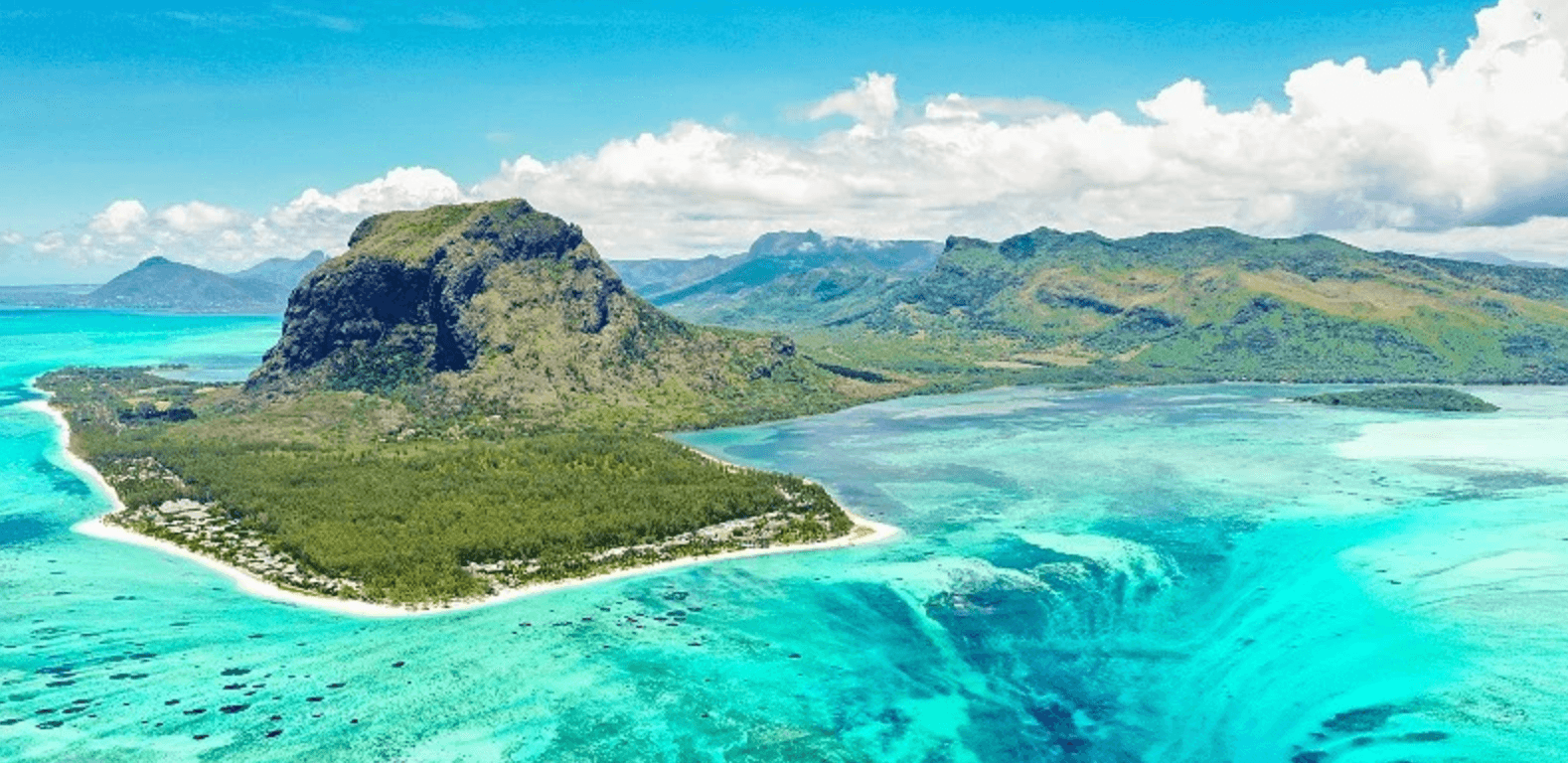

Guide pays : Mauritius
Mauritius Property Guide
Buying, living and investing in Mauritius
Mauritius is one of those places that looks like a holiday destination until you spend enough time there to realise there's a proper country behind the resorts.
It's an Indian Ocean island with African, Indian, Chinese, French and British influences all mixed together. English and French are everywhere, the currency is the Mauritian rupee, the legal system is established and there is a substantial international community.
For property buyers, though, there's one important difference from places such as France or Costa Rica.
Foreigners can buy property in Mauritius. They just can't buy whatever they like.
The government has created specific approved property schemes for international buyers. Within those schemes, genuine freehold ownership is possible and certain purchases can also provide Mauritian residency.
So Mauritius is open.
There's simply a menu.
Can foreigners buy property in Mauritius?
Yes, but non-citizens generally need to buy property that qualifies under one of Mauritius's approved foreign-ownership routes.
The main route for newer developments is the Property Development Scheme — PDS.
You'll also see resale properties from older IRS and RES schemes, along with approved developments under the Smart City Scheme and certain hotel-linked investments.
Another important category is G+2 apartments — apartments within qualifying buildings of at least ground floor plus two additional floors — subject to the applicable minimum price and Economic Development Board approval.
What you generally can't do is drive through a Mauritian village, spot a local house with a handwritten “for sale” sign and simply buy it in your own name because you have the money.
That's the distinction international buyers need to understand.
Freehold ownership is real. The entire Mauritian property market isn't open to you.
Approved foreign purchases involve the Economic Development Board — EDB, with a Mauritian notary handling the formal transfer.
Use professionals who regularly deal with non-citizen property purchases rather than assuming an ordinary local transaction works the same way.
Can buying property in Mauritius give you residency?
Yes, if the property and investment qualify.
This is one of Mauritius's biggest attractions for international buyers.
A non-citizen purchasing qualifying residential property worth at least US$375,000 under an eligible approved scheme can potentially obtain a residence permit linked to ownership of that property.
Qualifying dependants can also be included, subject to the programme's current rules.
The residence permit generally continues for as long as you continue to own the qualifying property.
That's important.
You're not simply buying any Mauritian house for US$375,000 and receiving residency.
The property itself needs to qualify.
There are also separate residence routes for retirees, professionals, investors and other applicants.
A US$375,000 qualifying PDS property and a US$375,000 local house might cost exactly the same amount. Only one may come with the residence route.
If residency matters, establish eligibility before paying a deposit.
How much does property cost in Mauritius?
There are really two Mauritian property markets.
There's the ordinary domestic market used primarily by Mauritian buyers.
Then there's the international market of PDS, IRS, RES, Smart City and qualifying apartment developmentsavailable to foreigners.
Foreign-eligible property naturally tends to be more expensive.
A good two-bedroom apartment in a modern PDS development can easily sit around US$380,000–US$650,000.
Three-bedroom villas commonly move into the US$700,000–US$1.2 million range.
Prime beachfront and luxury resort properties can run into several million dollars.
Location matters enormously.
Grand Baie and the north are probably the best-known international property markets, with beaches, restaurants, shopping, marinas and a large expat community.
Tamarin and Black River on the west coast have become particularly popular with international families and buyers wanting outdoor life, mountains, surfing and spectacular sunsets.
Moka and the central highlands offer something completely different — cooler weather, schools, business centres and more of an everyday residential lifestyle rather than living permanently beside the beach.
Then there's the east, with luxury resort developments and golf estates.
Don't just choose Mauritius. Choose which Mauritius you actually want.
What are rental yields in Mauritius?
Long-term furnished property in established international areas can broadly produce gross yields around 5–6%, depending on the purchase price, location and property.
Holiday rentals in strong tourist areas can sometimes produce higher gross returns, potentially around 6–10%, but naturally come with more seasonality and management.
Net returns are lower.
PDS developments often have communal facilities, security, landscaping, pools, gyms and other services.
They're lovely.
They also need paying for.
HOA or body-corporate fees, property management, maintenance, insurance and vacancies can reduce a 6% gross return to something closer to 3–4% net.
If you're buying primarily for investment, ask to see actual charges before completing.
The infinity pool looks fantastic in the brochure. Check how much you're contributing towards keeping it infinite.
For holiday rentals, actual historic booking data is considerably more useful than projected occupancy.
How much does it cost to buy property in Mauritius?
As a broad starting point, allow around 6–8% above the property price, depending on the transaction.
Registration duty is generally a major component, commonly around 5% for qualifying foreign property transactions.
You'll then have notary fees, EDB-related charges and potentially estate-agent commission.
Mauritian notary fees work on a sliding structure and can broadly add around another percentage point or so depending on the transaction.
Recent rules have also placed limits around agency commissions in certain transactions, so check the exact arrangement before signing anything.
Currency matters too.
Properties aimed at international buyers may be marketed in euros or US dollars, while parts of the actual transaction can involve Mauritian rupees.
On a US$500,000 or US$1 million purchase, exchange-rate movement is no longer loose change.
Sort the currency strategy before the completion date, not while somebody is waiting for the transfer.
What does it cost to own property in Mauritius?
Mauritius doesn't have the sort of large recurring national property tax that owners experience in some countries.
For international buyers inside PDS and similar developments, the more noticeable regular cost can be the body-corporate or estate-management charge.
That pays for the security, landscaping, pools, communal areas and other facilities that make these developments attractive.
Ask exactly what's included and how fees have changed over previous years.
A villa with relatively low annual taxes can still be expensive to hold if you're paying resort-level management charges every month.
Insurance also matters.
Mauritius is a tropical island exposed to cyclones.
The beautiful glass doors facing the Indian Ocean need insuring against the Indian Ocean occasionally becoming less friendly.
How easy is it to sell property in Mauritius?
Foreign-eligible property has a genuine international resale market, particularly inside established developments around Grand Baie, Tamarin, Black River and other recognised international areas.
But the buyer pool is naturally smaller than the entire Mauritian property market because you're selling a particular type of property at a particular price point.
Think in months rather than weeks.
Established branded developments can have an advantage because international buyers understand what they're purchasing and the legal eligibility is already established.
Seller costs can include agency commission and land-transfer taxes, depending on the transaction.
Mauritius is also attractive because private property gains are generally treated more favourably than in several European countries, although international owners still need to consider taxation in their home country.
A British owner, for example, shouldn't assume that because Mauritius doesn't tax something in a particular way, HMRC has suddenly lost interest.
Tax authorities don't usually take holidays just because you bought somewhere tropical.
What's it actually like living in Mauritius?
This is where Mauritius becomes much more interesting than the resort photographs.
The island is multicultural in a way that genuinely affects everyday life.
You'll hear French, English and Mauritian Creole constantly. Hindu temples, mosques, churches and Chinese businesses sit within the same communities.
Grand Baie has the most obvious international resort atmosphere.
The west around Tamarin and Black River feels more outdoorsy and increasingly family-oriented.
Moka and the central plateau are more practical for schools, work and everyday life.
And Port Louis is a busy working capital rather than somewhere designed around foreign property buyers.
Traffic deserves mentioning.
Mauritius isn't geographically large.
That doesn't mean you're getting across it quickly at 8:30 on Monday morning.
An island you can theoretically drive across isn't necessarily an island you can drive across before your appointment.
Spend time in the area you're considering during normal working life, not just during a holiday.
Weather
Mauritius has a tropical climate, but there's a noticeable difference between the coast and the central plateau.
Coastal areas are generally warmer.
Higher locations around places such as Curepipe and Moka can be cooler and wetter.
The cooler, drier period broadly runs from May through November, while the hotter, wetter months fall across the Mauritian summer.
Cyclone season is a genuine consideration.
Modern developments are built with tropical weather in mind, but construction quality, drainage, shutters, backup power and insurance should still form part of your buying decision.
And yes, you may genuinely own a jumper in Mauritius.
That's usually the point where somebody tells you you're acclimatised.
Food
Mauritian food tells the story of the island better than almost anything else.
It's a mixture of Indian, Creole, Chinese, African and French influences.
Try dholl puri, rougaille, curries, fresh tuna, octopus and the island's street food.
Grand Baie has plenty of restaurants catering to international tastes.
But get away from the tourist areas and you'll find the food that Mauritians actually eat.
Sunday curry matters.
So does Mauritian rum.
And the little roadside place with plastic chairs may well feed you better than somewhere with linen napkins overlooking the marina.
That's a recurring theme in these countries.
Things to do
The lagoon and reef obviously dominate island life.
There's diving, snorkelling, sailing, fishing, paddleboarding and enough beaches to spend several years arguing about which one is best.
Then you've got Black River Gorges National Park, hiking, waterfalls and mountains that make the interior feel completely different from the coast.
Port Louis gives you markets, street food and actual Mauritian city life.
Île aux Cerfs gives you the postcard.
The west coast gives you sunsets that appear to have been designed by somebody trying slightly too hard.
Mauritius is also compact enough that you can experience several completely different parts of the island in one day.
Traffic permitting.
Always traffic permitting.
Schools
Mauritius is particularly attractive to international families because both English and French play major roles in education and everyday life.
There are local state and private schools alongside French and international options, particularly around areas popular with foreign families such as the west and Moka.
School choice should influence where you buy.
A beautiful villa in the north becomes considerably less beautiful if you're spending several hours a day doing the school run.
For families relocating permanently, I'd choose the school first and draw a realistic driving radius around it.
Then look at houses.
Healthcare
Mauritius has public healthcare as well as a substantial private medical sector.
International residents commonly use private hospitals and clinics for speed and convenience, with providers such as C-Care operating major facilities.
Most routine and many specialist medical needs can be handled on the island.
For highly complex treatment, residents may sometimes travel to Réunion, South Africa or their home country.
Good private medical insurance therefore makes sense for long-term international residents.
Mauritius isn't medically isolated.
But it is still an island in the Indian Ocean.
Know what your insurance covers before you need to find out.
Is Mauritius safe?
Mauritius is generally regarded as a relatively safe place for international residents and visitors.
Petty theft, burglary and opportunistic crime do occur, particularly in busy tourist areas, so normal precautions still apply.
Grand Baie or Flic-en-Flac late at night naturally require more awareness than sitting inside a gated residential development.
Port Louis is a working city and should be treated like one.
For most residents, everyday risks are considerably more mundane.
Roads, swimming, strong currents, reefs and tropical weather are likely to feature in your life more often than serious violent crime.
Don't become careless because the beach looks peaceful. But don't spend your life behind the villa gate either.
So, is Mauritius a good place to buy property?
For the right international buyer, Mauritius has a very strong proposition.
You can own genuine freehold property within approved developments, potentially secure residence through a qualifying US$375,000+ purchase, live in an English-and-French-speaking environment and enjoy an established international community.
Rental returns can be respectable without being ridiculous, and there are no shortage of lifestyle reasons to own there.
The compromise is that foreigners don't have access to the entire property market.
You're generally buying from the internationally approved shelf.
That means prices are higher than the local market, and the PDS villa you're comparing with a Mauritian village house isn't really a fair comparison because only one may legally be available to you.
Grand Baie works for buyers wanting restaurants, convenience and an established expat scene.
Tamarin and Black River suit outdoor and family life.
Moka works for people who want schools, business and a more practical everyday base.
So don't simply ask whether Mauritius is a good place to buy.
Work out which version of Mauritius fits your life.
Mauritius gives foreign buyers a very clear deal: you can own the property, and qualifying purchases can even help you live there.
You just have to buy from the right menu.
Frequently asked questions about buying property in Mauritius
Can foreigners buy property in Mauritius?
Yes, but foreigners generally need to buy through approved schemes such as PDS, eligible IRS/RES resales, Smart City developments or qualifying G+2 apartments.
How much do foreigners need to spend on property in Mauritius to get residency?
A qualifying property purchase of at least US$375,000 can provide a route to a Mauritian residence permit, subject to the current programme requirements.
How much does property cost in Mauritius?
Foreign-eligible two-bedroom properties commonly start in the mid-hundreds of thousands of US dollars, while larger villas frequently cost US$700,000–US$1 million or more. Luxury beachfront property can run into several million dollars.
What are typical rental yields in Mauritius?
Long-term gross yields around 5–6% can be achievable in established international areas, with holiday rentals potentially higher. Net returns are lower after management, estate charges, maintenance and vacancies.
Where is the best place to buy property in Mauritius?
Grand Baie suits buyers wanting an established international community and amenities. Tamarin and Black River are popular for outdoor and family life, while Moka offers a more practical inland base close to schools and business centres.