
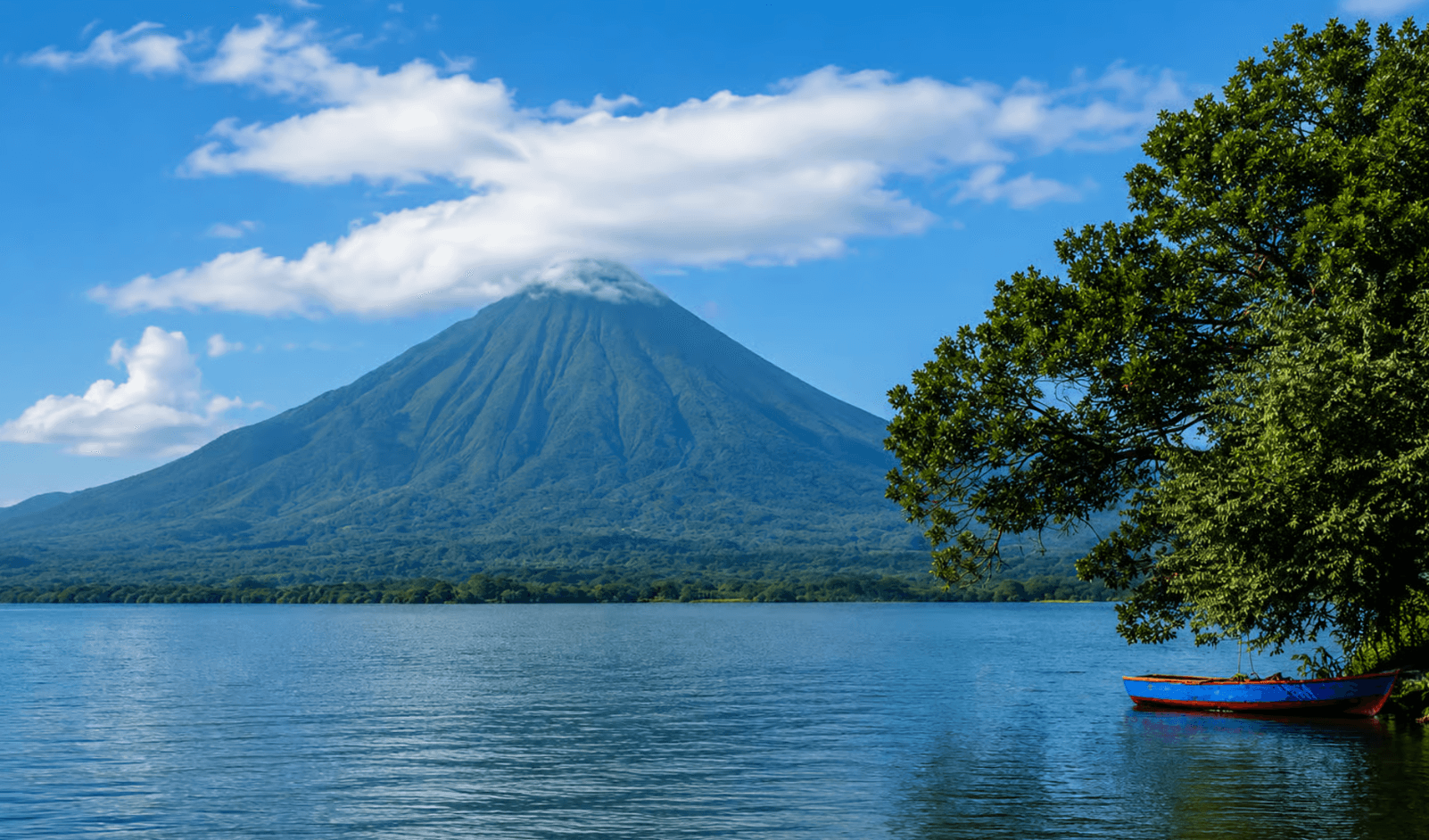

Guide pays : Nicaragua
Nicaragua Property Guide
Buying, living and investing in Nicaragua
Nicaragua can look remarkably tempting when you've just spent an afternoon looking at property prices next door in Costa Rica.
You've got colonial cities, volcanoes, Pacific surf towns, huge lakes, tropical weather and genuine freehold property at prices that can still feel several years behind its more expensive neighbour.
Granada is the postcard. San Juan del Sur is the international surf town. Tola and Popoyo are the Pacific lifestyle play. Managua is where much of the serious business and private healthcare happens.
But Nicaragua also comes with something that can't be measured in square metres.
Political and institutional risk matters here.
That doesn't mean foreigners can't or don't buy property successfully. They do.
It means the discount compared with Costa Rica isn't entirely accidental.
Can foreigners buy property in Nicaragua?
Yes. Foreigners can generally own titled property in Nicaragua directly and with broadly similar ownership rights to Nicaraguan citizens.
There's no general requirement for the trust structure that foreign buyers encounter in certain other Latin American markets.
But title due diligence matters enormously.
Use an independent Nicaraguan lawyer to investigate the property's ownership history, registration, liens, municipal taxes, cadastral information and physical boundaries.
And get a proper survey.
Old colonial houses, rural land and coastal properties can have complicated histories.
If the boundary is being explained using a mango tree and somebody's uncle's memory, get the surveyor involved.
There are also additional restrictions and considerations around certain border areas and coastal property.
Recent legal changes affecting land near Nicaragua's international borders make specialist advice particularly important if you're looking anywhere close to Costa Rica or Honduras.
The simple rule is this:
Don't buy cheap land from Facebook because somebody says they've “never had a problem”.
Pay somebody qualified to find the problem before it becomes yours.
Can foreigners live in Nicaragua if they buy property?
Buying a Nicaraguan property doesn't automatically give you residency.
Nicaragua has historically offered residence categories for retirees — pensionados — people with qualifying passive income, investors, workers and family members.
You'll still see plenty of websites quoting the old pensionado incentives and benefits.
Be careful.
Some of the historic legislation and tax benefits associated with those programmes have changed or been repealed, and older expat articles can therefore be badly out of date.
Income requirements commonly quoted for residence can also change.
If residency is part of your move, check the current requirements directly with a qualified Nicaraguan immigration professional rather than planning your life around a ten-year-old blog.
The internet remembers every residency programme a country has ever had. Governments don't necessarily keep them.
Property ownership and residency should therefore be treated as separate decisions.
How much does property cost in Nicaragua?
This is Nicaragua's biggest attraction for many international buyers.
It can still be considerably cheaper than Costa Rica and Panama.
In Granada, restored colonial houses can broadly range from around US$80,000–US$250,000, although beautifully restored larger properties can go considerably higher.
Renovation projects can appear from much lower prices.
In San Juan del Sur, Tola and Popoyo, international-buyer property can range from relatively modest condos or houses around US$100,000 into several hundred thousand dollars for villas with pools, land and ocean views.
Managua offers everything from relatively inexpensive houses to substantial properties inside gated communities.
Across the areas international buyers commonly consider, US$70,000–US$250,000 still buys a meaningful amount of property.
That's one reason people look here.
But don't compare a US$150,000 Nicaraguan house directly with a US$350,000 Costa Rican house and conclude you've found free money.
You're buying into two different economic, political and resale environments.
Nicaragua can be cheaper than Costa Rica for a reason. Decide whether you're comfortable owning the reason as well as the house.
What are rental yields in Nicaragua?
Rental investment needs to be approached locally rather than using a national yield figure.
Managua has long-term local rental demand.
Granada has a mixture of local, expat and tourism demand.
San Juan del Sur and the Pacific surf areas can produce genuine short-term holiday income, particularly during stronger tourism periods.
But seasonality matters.
A property performing brilliantly during Christmas, Easter and the dry season isn't automatically producing the same occupancy during wet-season weeks.
If somebody is selling you an investment based on an 8% or 10% return, ask for the historic bookings.
Not projected bookings.
Actual bookings.
Then deduct management, cleaning, maintenance, utilities, tax, repairs and empty periods.
The ocean view doesn't pay rent when nobody is sleeping in front of it.
For most international buyers, I'd treat rental income as something to analyse property by property rather than assuming Nicaragua automatically produces a particular percentage.
How much does it cost to buy property in Nicaragua?
As a broad starting point, budget around 5–8% above the purchase price, depending on the value and structure of the transaction.
Nicaragua uses a sliding system of property-transfer withholding or taxation, with rates increasing according to the property's value.
You'll also have legal, notary, registry and potentially surveying costs.
This isn't the part of the transaction where I'd try to save US$500.
Good legal work is particularly important in a country where title history can occasionally be complicated.
Annual municipal property tax also exists and is generally based on a cadastral or assessed value rather than simply the property's online asking price.
Overall holding costs can remain relatively modest compared with many North American or European markets.
But inexpensive annual tax doesn't repair a defective title.
How easy is it to sell property in Nicaragua?
This is where buyers need to be realistic.
Nicaragua has a property market.
It doesn't have enormous liquidity.
A sensibly priced house in a good Managua gated community can attract local demand.
Granada has an established international buyer market.
San Juan del Sur and the Pacific coast attract lifestyle buyers, surfers, retirees and investors.
But you're still dealing with a comparatively small pool.
Properties can take several months to sell, and unusual or overpriced homes can take considerably longer.
Once you've found a buyer and the title is clean, a cash transaction can often complete in roughly 30–90 days.
Estate-agent commissions around 5–6% are common, sometimes higher depending on the location and arrangement.
Taxes on gains and withholding treatment need to be checked with a Nicaraguan accountant for your particular circumstances.
Most importantly:
Buy a property somebody else might eventually want.
A six-bedroom jungle villa two hours down an unpaved road might be your dream.
You only need to remember you'll eventually need to find another person having exactly the same dream.
What's it actually like living in Nicaragua?
Nicaragua can be an extraordinary place to live for the right person.
Granada has colourful colonial architecture, courtyards, cafés, restaurants and a long-established international community.
San Juan del Sur has surfing, beaches, restaurants and a much younger international feel.
Popoyo and Tola appeal to people who want to be closer to the surf and further away from town.
Managua is a different proposition entirely — sprawling, busy and not particularly designed around tourism, but it's where you'll find many of the country's businesses, larger private hospitals and practical services.
Spanish makes a major difference.
You can survive surprisingly well inside certain expat communities without much of it.
But you're living in Nicaragua.
Learn Spanish.
Your experience of the country will improve dramatically.
Weather
Nicaragua is tropical.
The Pacific side generally has a drier season from around November to April and a wetter period through much of May to November.
Heat is normal.
The Caribbean side is wetter and has very different infrastructure and logistics.
Nicaragua is also a country of volcanoes, earthquakes and tropical storms.
Those aren't reasons not to buy.
They're reasons to understand construction quality, drainage, access and insurance.
If the property is sitting on a steep tropical hillside overlooking the Pacific, ask what happens to the road after three days of serious rain.
The dry-season viewing tells you what the house looks like. The rainy season tells you whether you can get home.
Food
Nicaraguan food is straightforward and very good when you eat where Nicaraguans eat.
Start with gallo pinto, then you've got vigorón, quesillo, nacatamales, grilled meat, plantains, fresh Pacific fish and excellent locally grown coffee.
Granada and San Juan del Sur naturally have plenty of restaurants catering to international visitors.
But the market, roadside restaurants and local comedores are where you'll start understanding the country properly.
Sunday morning and a nacatamal is practically its own institution.
And the coffee deserves considerably more international attention than it gets.
Things to do
Nicaragua is spectacular.
Walk the colonial streets of Granada, then take a boat through Las Isletas on Lake Nicaragua.
Surf around San Juan del Sur, Popoyo and Tola.
Visit Ometepe, sitting in Lake Nicaragua beneath two volcanoes.
There's León, volcanic landscapes, cloud forest, lakes and a Pacific coastline that remains far less developed than Costa Rica's.
Then you've got the Caribbean side and the Corn Islands, which feel almost like another country.
This isn't polished European tourism.
That's part of the appeal.
Nicaragua still feels like somewhere you explore rather than somewhere that's been organised for you.
Schools
Public education is primarily in Spanish and standards vary.
International and bilingual options are concentrated mainly around Managua, with some private schooling available in areas with established international communities.
Families moving to coastal areas need to investigate this carefully.
A great surf break isn't an education plan.
If you've got older children following GCSE, A-level, IB or another international curriculum, establish exactly how that continues before buying the beach house.
Healthcare
The strongest private healthcare is concentrated in Managua.
Private hospitals and specialists there can handle a broad range of medical needs.
Granada, San Juan del Sur and other towns can deal with routine care, but serious or highly specialised cases may require travelling to the capital or potentially overseas.
Public healthcare exists but resources and standards can vary.
For international residents, good private medical insurance and appropriate evacuation cover make sense.
If you're buying several hours from Managua, ask yourself a very simple question:
What happens if I need a proper hospital tonight?
The answer matters more than how far you are from the beach.
Is Nicaragua safe?
There are really two different questions here: everyday personal safety and political/legal risk.
In places such as Granada, San Juan del Sur and established residential parts of Managua, many foreign residents experience ordinary life without serious crime. Petty theft, burglary and opportunistic crime still require sensible precautions.
The separate issue is Nicaragua's political environment.
International governments have raised concerns in recent years about arbitrary enforcement of laws, detention, restrictions on political activity and treatment of government critics.
That is relevant to somebody considering becoming a long-term resident or placing significant capital in the country.
It doesn't mean every foreign homeowner is in immediate danger or that ordinary life can't feel completely normal.
It does mean Nicaragua shouldn't be assessed purely through crime statistics.
Political risk is still risk, even when you can't see it from the swimming pool.
If you're relocating permanently, understand the current legal and political environment as carefully as you understand the property's title.
So, is Nicaragua a good place to buy property?
Nicaragua can offer remarkable value.
Granada still has beautiful colonial houses at prices difficult to replicate elsewhere. The Pacific coast offers serious surfing and lifestyle property. San Juan del Sur has an established international community. And US$150,000 can still buy something genuinely interesting.
Foreigners can generally own property directly, and annual ownership costs can be relatively modest.
But you need to accept why Nicaragua trades at a discount to places such as Costa Rica.
Title due diligence needs to be excellent.
Resale liquidity is thinner.
Healthcare becomes more limited away from Managua.
And political and institutional risk deserves genuine consideration.
For some buyers, that trade-off will make complete sense.
For others, paying more next door in Costa Rica will feel worth it.
Neither decision is automatically right.
Nicaragua gives you a lot of property for the money.
Just make sure you're pricing the country as carefully as you're pricing the house.
Frequently asked questions about buying property in Nicaragua
Can foreigners buy property in Nicaragua?
Yes. Foreigners can generally own titled property directly, although additional rules can apply around certain border and coastal areas.
How much does property cost in Nicaragua?
In areas popular with international buyers, homes can commonly range from around US$70,000–US$250,000, with larger coastal villas and premium properties costing more.
Can buying property in Nicaragua give me residency?
No. Property ownership doesn't automatically provide residency. Nicaragua has separate residence categories for retirees, people with qualifying income, investors and others.
Is Nicaragua cheaper than Costa Rica for property?
Generally, yes. Comparable lifestyle property can cost considerably less in Nicaragua, although buyers should also consider differences in political risk, resale liquidity, infrastructure and healthcare.
Where do foreigners buy property in Nicaragua?
Granada, San Juan del Sur, Tola and Popoyo are among the best-known international-buyer markets, while Managua appeals more to people wanting city infrastructure, employment and access to major private healthcare.