
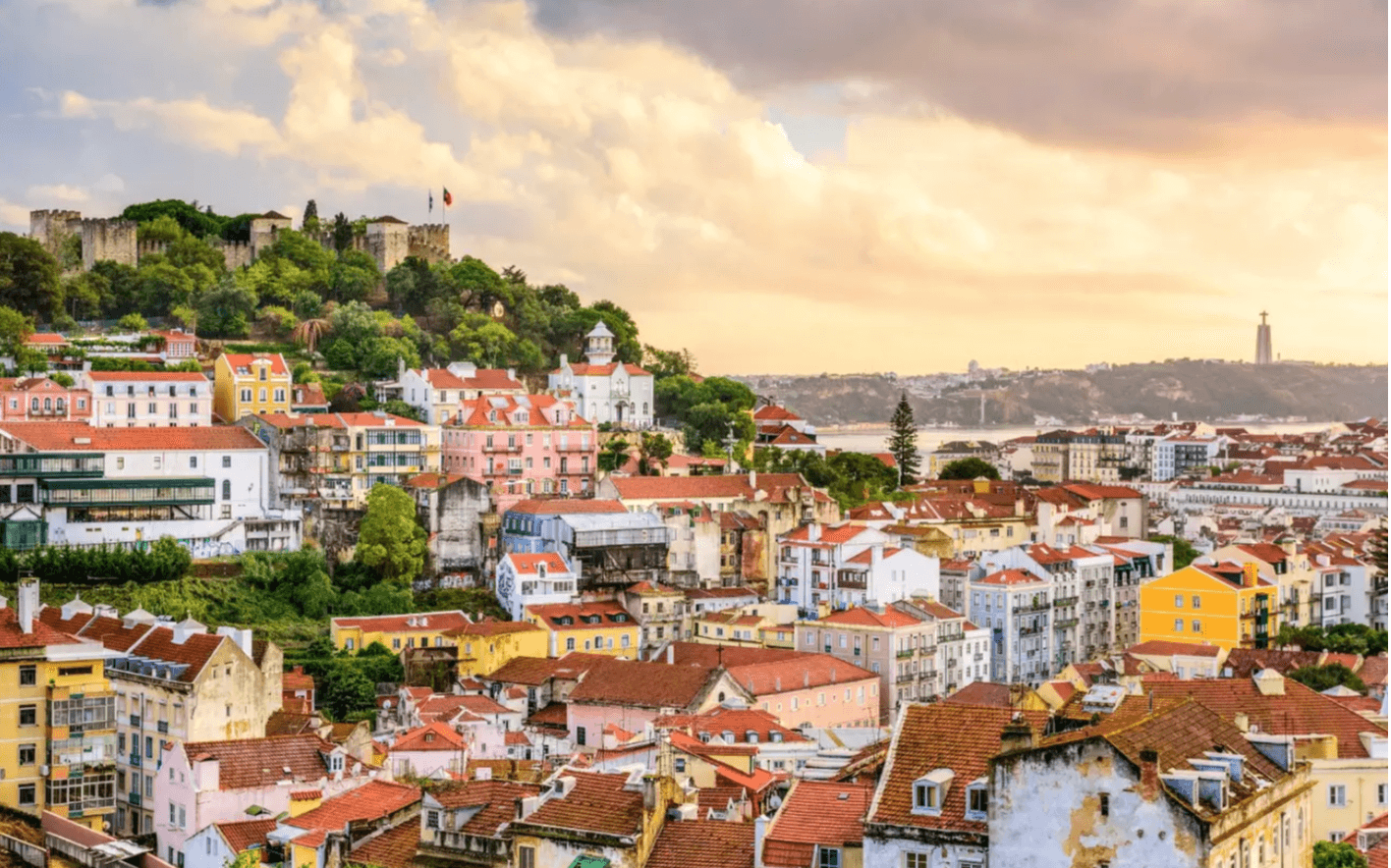

Guide pays : Portugal
Portugal Property Guide
Buying, living and investing in Portugal
Portugal spent years being described as Europe's affordable secret.
The secret is definitely out.
Lisbon has become expensive, prime Algarve property has an enormous international buyer base and even Porto isn't the bargain it once was. House prices have risen dramatically, while some of the incentives that originally attracted foreign buyers have changed or disappeared.
But Portugal itself hasn't stopped being attractive.
You've still got the Atlantic coastline, relatively mild climate, excellent food, safe cities, established healthcare, the euro and straightforward foreign property ownership.
Lisbon is international and expensive. Porto is the slightly more sensible sibling. The Algarve is where half of northern Europe appears to have bought a terrace. And the interior is where Portugal can still surprise you with the amount of property your money buys.
Just don't arrive using a 2019 relocation guide.
Portugal has changed.
Can foreigners buy property in Portugal?
Yes. Foreigners can generally buy Portuguese property directly with full ownership rights.
There isn't a general nationality restriction requiring foreign buyers to use a local partner or special ownership structure.
You will need a Portuguese tax number — NIF — before getting very far.
I'd also use an independent Portuguese lawyer to investigate the property's legal status, title, planning position and documentation.
Important documents can include the certidão permanente, cadastral and tax records and the property's licence or evidence of legal use.
This becomes particularly important with older and rural properties.
The little stone building beside the main house may have been there for 70 years.
That doesn't necessarily mean anybody told the council about it.
In Portugal, buy the house that's legally on the paperwork — not simply the house that's physically standing there.
Rural properties also deserve proper surveys, particularly around water, wells, septic systems, access and boundaries.
Can foreigners live in Portugal if they buy property?
Buying property and obtaining Portuguese residency are separate things.
EU and EEA citizens have relatively straightforward rights to live and work in Portugal.
Non-EU nationals need the appropriate visa or residence route.
Portugal's D7 visa remains particularly popular with retirees and people with qualifying recurring or passive income.
There's also the D8 digital-nomad route for qualifying remote workers, which has a considerably higher income requirement.
Portugal still has a Golden Visa, but buying a house no longer qualifies.
The property route was closed in 2023.
Current Golden Visa routes involve other qualifying investments rather than simply purchasing Portuguese real estate.
That's worth repeating because there are still plenty of old articles online saying otherwise.
A €500,000 apartment in Lisbon can be a very nice apartment. It isn't a Golden Visa anymore.
Portugal's old NHR tax regime also closed to most new applicants, with a narrower replacement regime focused on particular qualifying professions and activities.
If you're moving primarily because of tax or residency, get current advice before buying.
The Portugal somebody moved to five years ago isn't necessarily the programme available to you today.
How much does property cost in Portugal?
Portugal's property market has risen enormously.
Recent national transaction figures have moved beyond roughly €2,000 per square metre, but the national number hides huge differences.
Foreign buyers also tend to pay more because they're disproportionately buying in the country's more expensive coastal and urban markets.
Lisbon is the obvious example.
Prime areas can easily move beyond €5,000 per square metre, with particularly desirable neighbourhoods and new developments going substantially higher.
Cascais and the surrounding coast carry their own international premium.
The Algarve is another major foreign-buyer market, particularly around places such as Lagos, Albufeira, Vilamoura, Quinta do Lago and Vale do Lobo.
Porto generally remains cheaper than Lisbon, although prices have risen sharply there too.
Then leave those markets behind.
Smaller cities and the Portuguese interior can still provide dramatically better value.
That's the Portugal many international buyers overlook.
Don't search for “property in Portugal” and assume you've seen the Portuguese market after looking at Lisbon and Lagos.
There's an entire country between them.
What are rental yields in Portugal?
Portugal can provide decent rental returns, but yields in the most fashionable areas have been squeezed by rising purchase prices.
Gross apartment yields nationally can broadly sit around 4–5%, depending on the source and methodology.
Lisbon often falls towards the lower end because property prices are so high.
Porto, Faro and some secondary cities can offer better percentage returns.
Interior cities may produce surprisingly attractive yields if there's genuine local rental demand.
Short-term rentals are a separate question.
Portugal's Alojamento Local — AL — system has changed considerably, with local restrictions particularly important in Lisbon, Porto and other high-demand areas.
Don't buy an apartment because the agent says, “You can Airbnb it.”
Check that you actually can.
Then check what occupancy looks like outside summer.
Portugal has enough tourists. That doesn't mean every Portuguese apartment is automatically a tourism business.
How much does it cost to buy property in Portugal?
Buyers need to budget for more than the advertised property price.
The main acquisition tax is IMT — Imposto Municipal sobre as Transmissões Onerosas de Imóveis.
The amount depends on the property's value, use and the buyer's circumstances, with different rules and potential reliefs applying in particular situations.
You'll also normally pay 0.8% stamp duty, plus legal, notary and registration costs.
Foreign and non-resident buyers should pay particular attention to the rules applying to them at the date of purchase because Portugal has been actively changing housing and tax policy.
For a second-home or investment purchase, total acquisition costs can become substantial.
I'd want the lawyer or accountant to produce the actual transaction calculation before committing rather than simply applying a percentage found online.
Estate-agent commission is generally paid by the seller and commonly falls somewhere around 3–5% plus VAT.
Portugal also has annual IMI, a municipal property tax based on the property's taxable value.
Higher-value property holdings can potentially attract additional AIMI.
So the buying costs aren't frightening.
But they're not insignificant either.
How easy is it to sell property in Portugal?
Portugal has a mature property market and strong liquidity in areas such as Lisbon, Porto and the Algarve.
A good property at a realistic price can attract buyers relatively quickly.
An overpriced one can sit there while three estate agents repeatedly change the photographs.
Once the transaction is agreed and documentation is in order, completion can often take somewhere around four to eight weeks, although finance and legal complications can extend that.
Rural property is different.
A village house deep in the interior may be fantastic value, but the eventual buyer pool is much smaller.
That's the recurring rule with international property:
The place where you get the most house for your money is often the place where you'll need the most patience when selling it.
Capital-gains tax can also apply on sale, with treatment depending on residency, use of the property and individual circumstances.
If the exit matters to your investment case, understand the tax before you buy.
What's it actually like living in Portugal?
Portugal is an easy country to like.
Lisbon is a proper international capital with restaurants, business, nightlife and the Atlantic almost on the doorstep.
Porto feels different — smaller, cooler, wetter and arguably more Portuguese in parts.
The Algarve can feel almost like a country within the country, particularly in areas with large British, Dutch, German and other northern-European communities.
Then there's central and northern Portugal, the Alentejo and the interior.
Life becomes quieter, property gets cheaper and Portuguese becomes considerably more useful.
That's worth remembering.
You can survive surprisingly well speaking English in Cascais or parts of the Algarve.
That's not the same as living properly in Portugal.
Learn some Portuguese.
The country opens up considerably when you do.
Weather
Portugal faces the Atlantic.
That matters.
Lisbon has mild winters, warm to hot summers and plenty of sunshine.
Porto and the north are greener because they get considerably more rain.
The Algarve has the climate that persuaded generations of northern Europeans to start checking Portuguese property websites during February.
The interior is another matter entirely.
Winters can be properly cold and summers extremely hot.
Then you've got Madeira and the Azores, which offer completely different island climates while still being Portugal.
If you're buying somewhere because you loved it in August, visit in January.
If you're buying somewhere because you loved it in January, you're probably already sold.
Food
Portugal does food extremely well without needing to make a performance out of it.
You've got bacalhau in apparently endless variations, grilled sardines, seafood, pork dishes from the Alentejo, excellent bread and the inevitable pastel de nata.
Then there's wine.
Vinho Verde in the north, the Douro, Alentejo wines and enough local varieties to make researching them a legitimate long-term project.
Lisbon naturally has an enormous international restaurant scene.
But find a proper local tasca and order whatever everybody else is eating.
It will probably cost less.
And it may well be better.
Things to do
Portugal punches well above its size.
Lisbon and Porto provide the cities.
The west coast provides some of Europe's best surfing.
The Algarve gives you beaches, golf and spectacular cliff walks.
The Douro Valley gives you vineyards and one of Europe's great landscapes.
Then there's Sintra, the Alentejo, historic towns, fishing villages and hundreds of kilometres of Atlantic coastline.
Madeira gives you mountains and year-round outdoor life.
The Azores feel like somebody moved Portugal much further into the Atlantic and turned the scenery up.
You can spend years exploring Portugal without needing to leave Portugal.
That's not a bad argument for owning a base there.
Schools
Portuguese state schools are free and teaching is primarily in Portuguese.
International families have a wide choice of private and international schools around Lisbon, Cascais, Porto and the Algarve.
International-school fees can become a meaningful part of a family's budget.
And location matters enormously.
Cascais might look close to Lisbon on a map.
The school run will give you its own opinion.
Families moving permanently should decide whether they want children inside the Portuguese system or an international curriculum before choosing the property.
Choose the school, understand the commute, then buy the house.
Healthcare
Portugal has a well-established public healthcare system — the SNS — available to eligible residents.
You'll need to become properly registered and obtain your healthcare-user number.
Private healthcare is also widely used, particularly by international residents who want quicker access to specialists and English-speaking services.
Lisbon and Porto have excellent private hospitals.
Healthcare becomes more limited in some rural areas, which is worth considering if you're planning retirement in the interior.
Portugal's healthcare system is one of the country's significant advantages for long-term residents.
Just don't assume the tiny village where you've found a €70,000 house also has a cardiologist.
Is Portugal safe?
Portugal is generally considered one of Europe's safer countries.
Violent crime is relatively low.
For visitors and international residents, the more familiar problems are pickpocketing and opportunistic theft around busy tourist areas such as Lisbon's Baixa and Alfama, Tram 28 and Porto's Ribeira.
Outside the major tourist centres, many towns and villages feel extremely safe.
Wildfires are a more significant seasonal risk in parts of rural Portugal, particularly during hot, dry summers.
If you're buying an isolated country property, access, vegetation and fire risk deserve proper consideration.
That's probably more relevant to your daily property ownership than worrying about street crime.
So, is Portugal a good place to buy property?
Portugal is still one of Europe's strongest lifestyle propositions.
It's safe, well connected, has good healthcare, excellent food, the Atlantic coast, the euro and a property market that foreign buyers can access relatively easily.
But the old sales pitch needs updating.
Portugal isn't particularly cheap anymore in the places international buyers know best.
The property Golden Visa has gone.
The original NHR tax regime has gone for most new arrivals.
Lisbon and the Algarve have already been discovered.
That doesn't make Portugal unattractive.
It just means the reason for buying needs to be Portugal itself rather than an incentive programme.
Lisbon works if you want an international capital.
Porto offers a different city life and generally better value.
The Algarve remains one of Europe's most established foreign second-home markets.
And the interior still offers the possibility of buying a remarkable amount of house for comparatively little money.
Portugal doesn't need the Golden Visa to be worth moving to.
The Atlantic, the lifestyle and the country were always the better reasons anyway.
Frequently asked questions about buying property in Portugal
Can foreigners buy property in Portugal?
Yes. Foreign nationals can generally buy Portuguese property directly without needing a local partner or special foreign-ownership structure.
How much does property cost in Portugal?
Prices vary enormously. Lisbon and prime Algarve locations can exceed €5,000 per m², while smaller cities and inland areas can offer substantially lower prices.
Can buying property in Portugal give me a Golden Visa?
No. Property purchases no longer qualify for Portugal's Golden Visa. Other qualifying investment routes remain available.
What are typical rental yields in Portugal?
Gross residential yields commonly fall around 4–5%, although returns vary significantly by city and property type. Prime Lisbon can produce lower yields because purchase prices are high.
Where is the best place to buy property in Portugal?
Lisbon suits buyers wanting an international city, Porto offers a smaller urban alternative, the Algarve has an established second-home and expat market, while inland Portugal can offer considerably more property for the money.